Crosswalks and Public Art
My public-art work begins with the site. I look at movement, scale, neighborhood context, and the practical conditions of installation to create artwork that feels specific to its location and durable in everyday use. The work is designed to do more than beautify a space. It helps define a place, invites attention, and supports a stronger public experience.
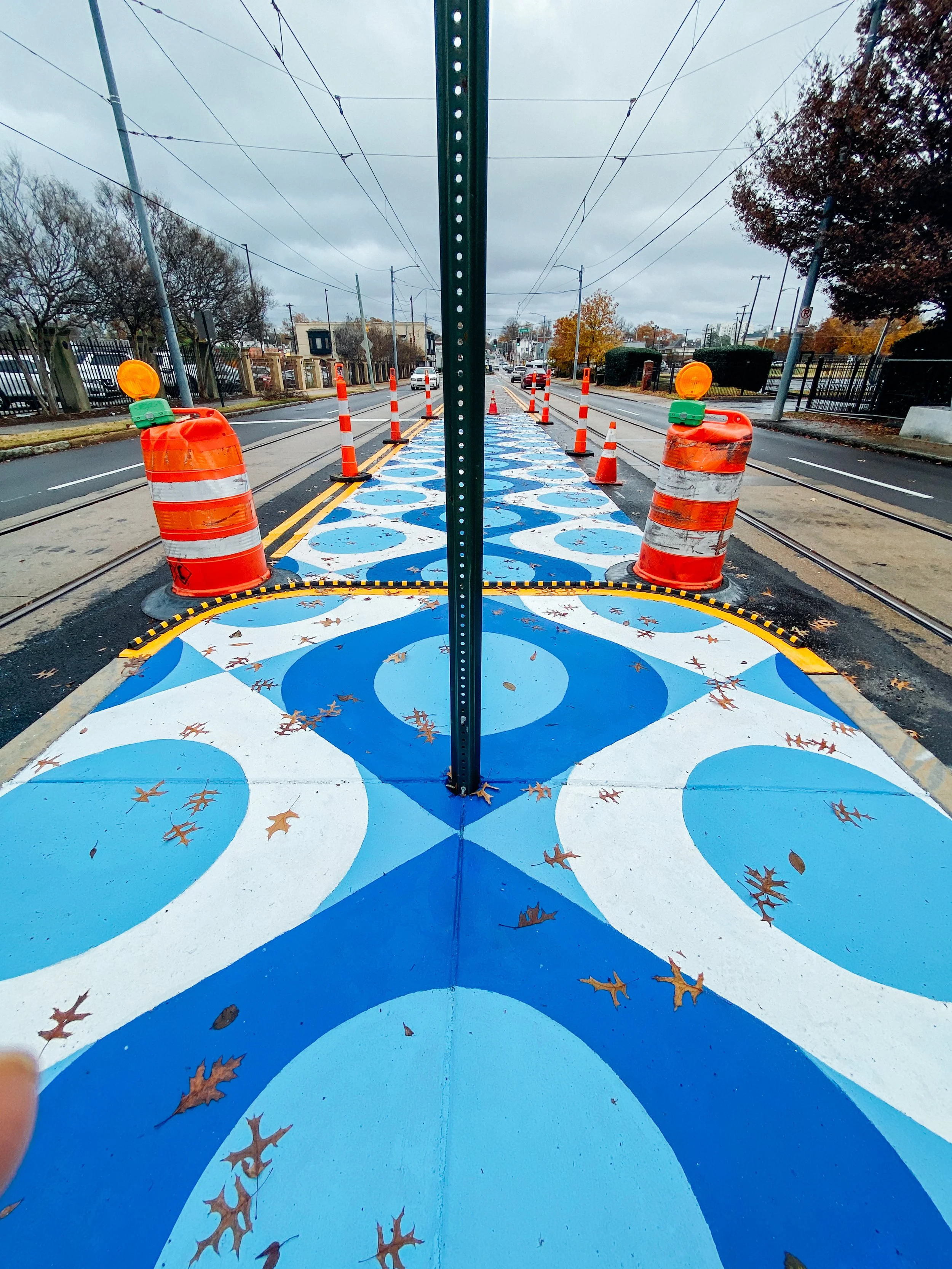
Selected Case Studies
A selection of crosswalk, asphalt-art, and public-space design projects shaped by context, function, and place.
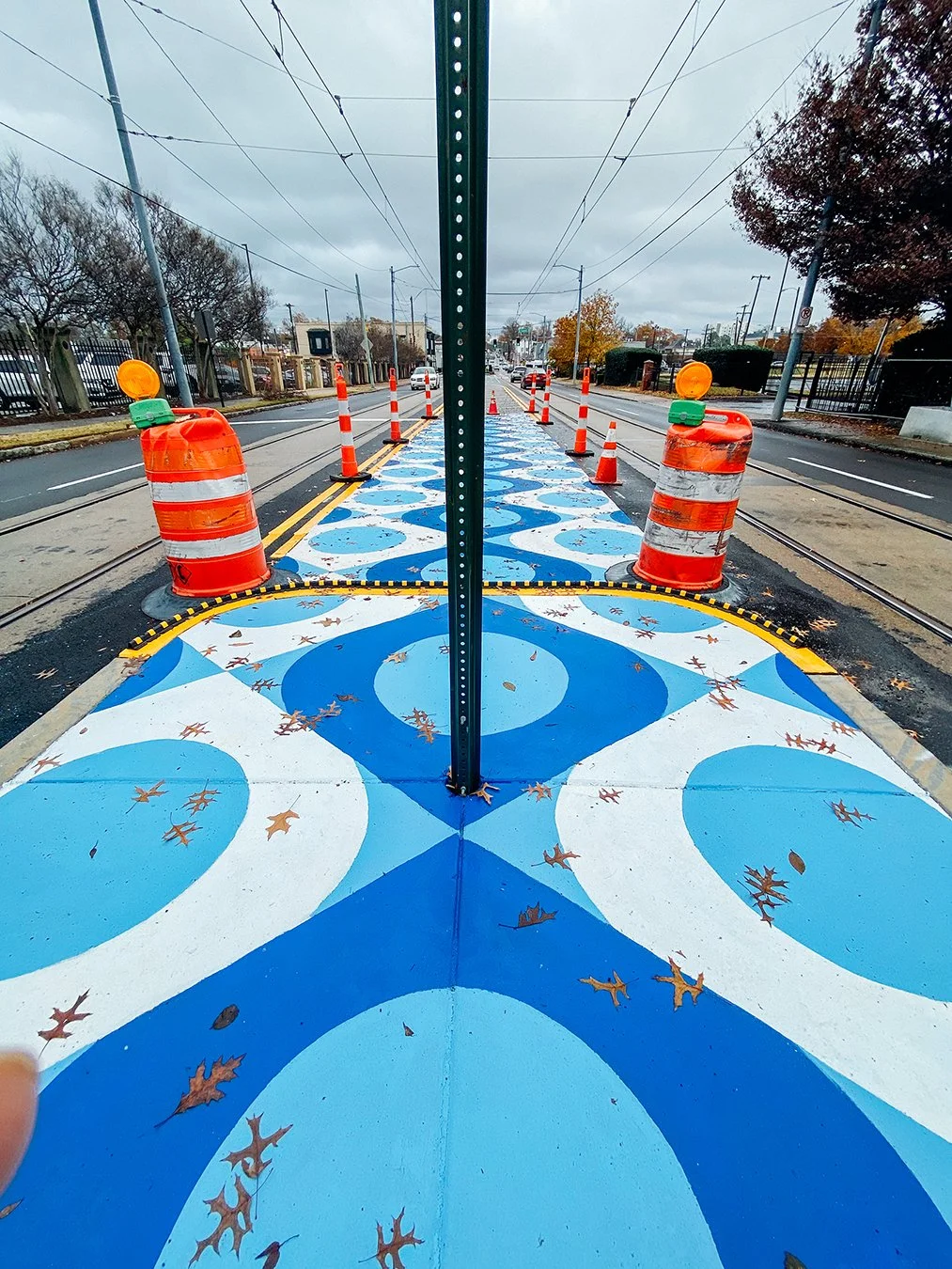
Southern College of Optometry Asphalt Art
A site-responsive asphalt art project connecting campus identity, corridor visibility, and pedestrian experience.
View Case Study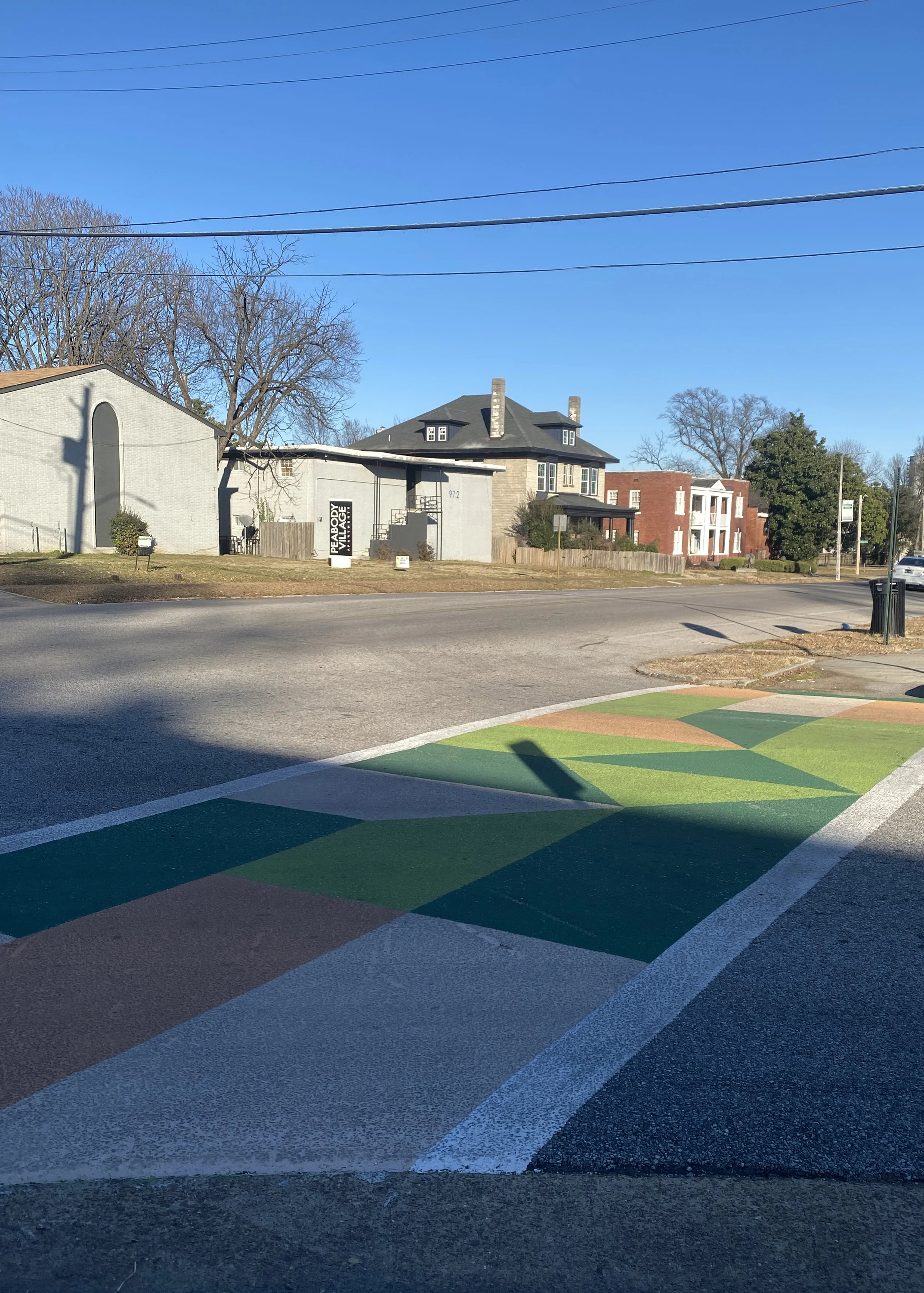
Peabody Vance Neighborhood Association Crosswalks
A crosswalk pair developed to reflect Peabody Vance Neighborhood Association's energy through rhythm, color, and site-responsive pattern.
View Case Study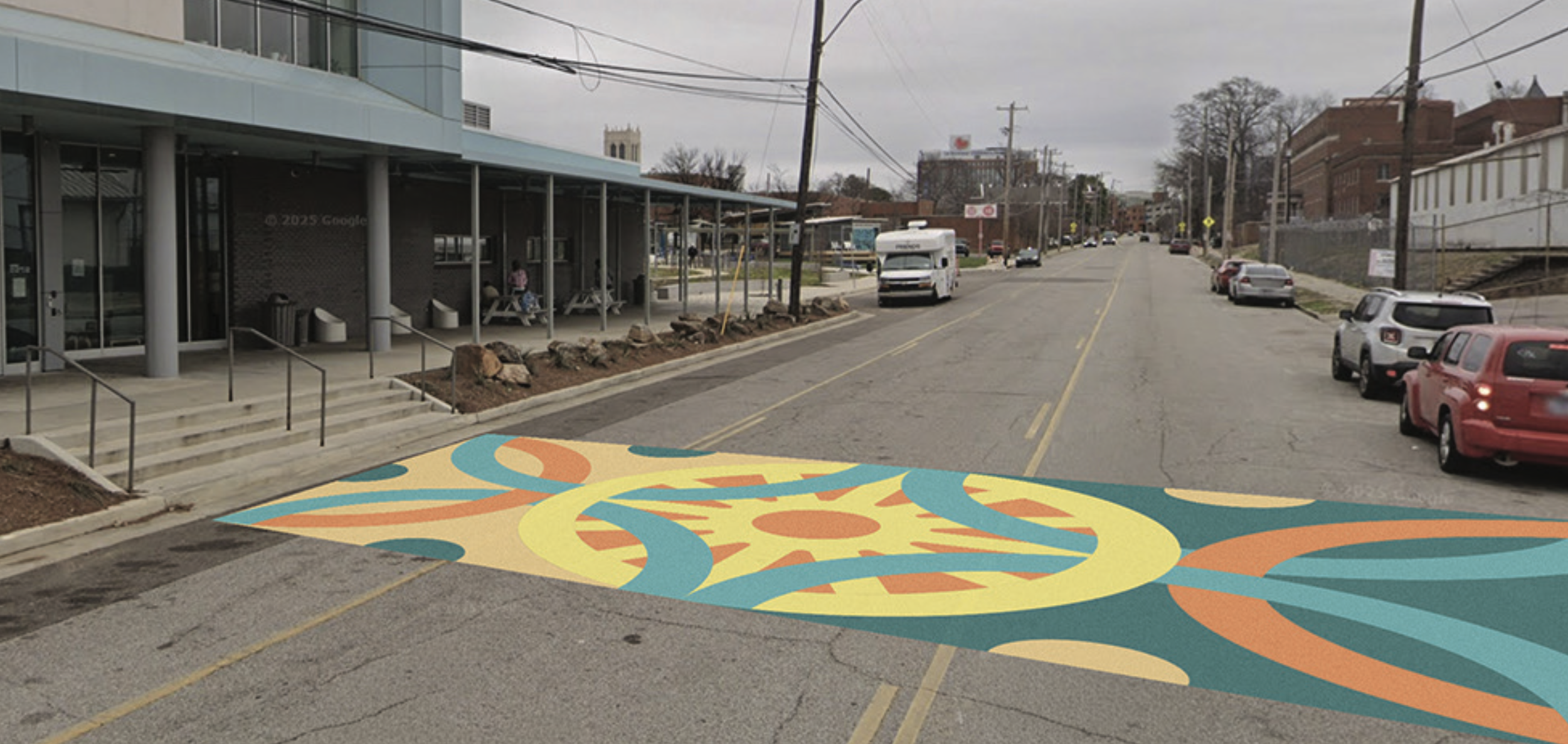
Hospitality Hub Crosswalk: Place in the Sun
A trauma-informed crosswalk design using calm color, abstract geometry, and a central sun motif to create a welcoming public threshold.
View Case StudyCase Study: Southern College of Optometry Asphalt Art
A public-facing graphic intervention that connects institutional identity with pedestrian experience.
Overview
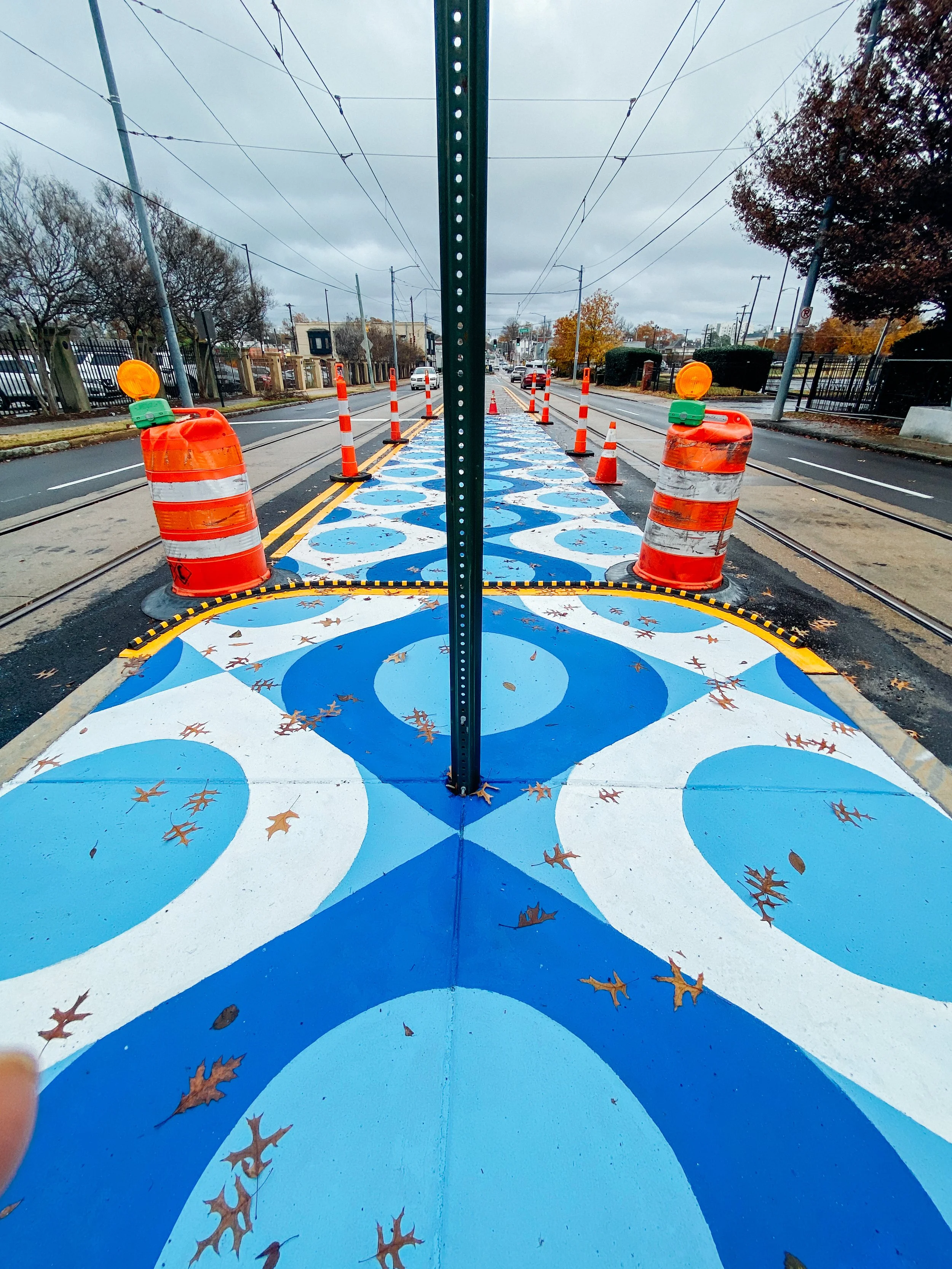
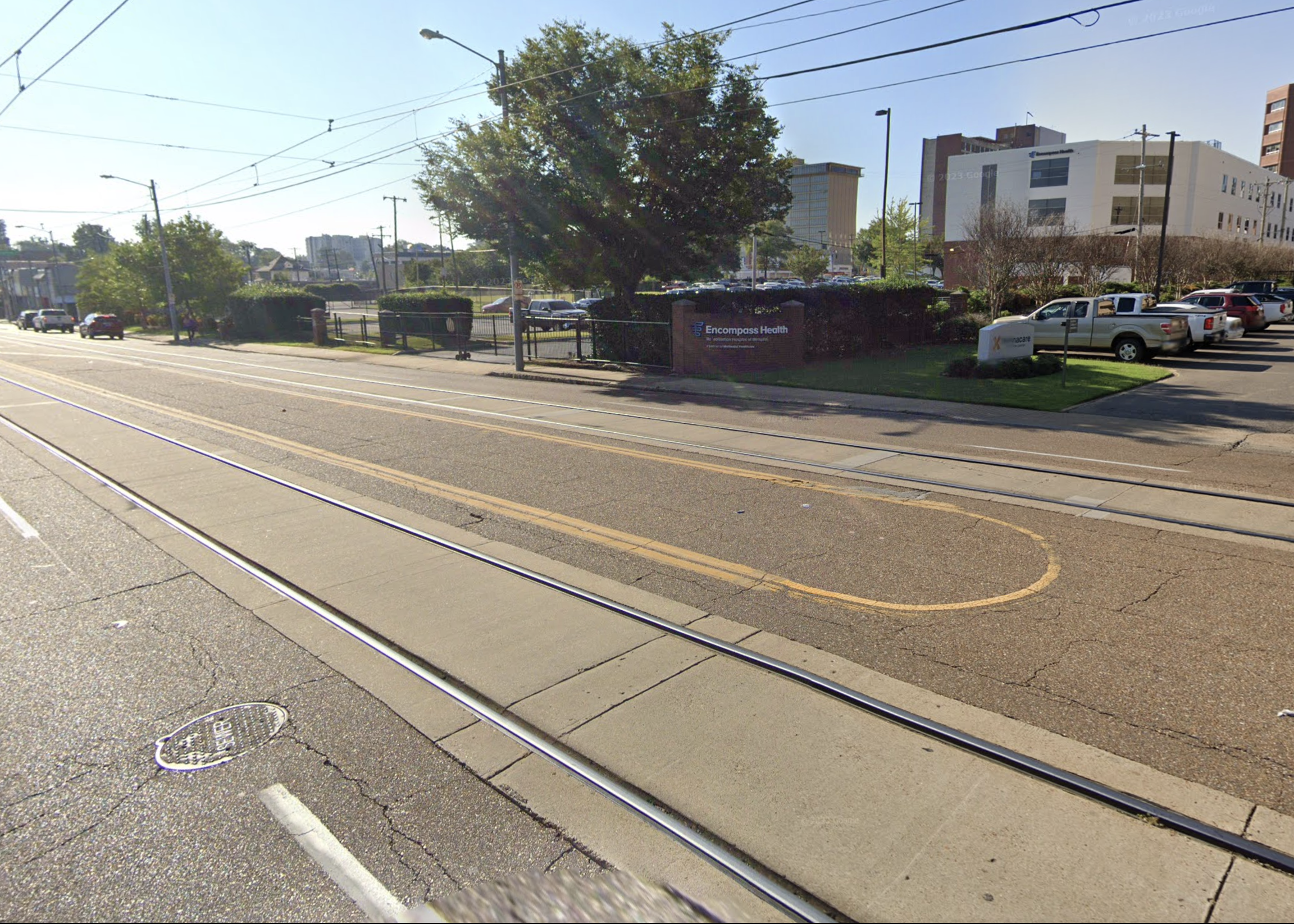
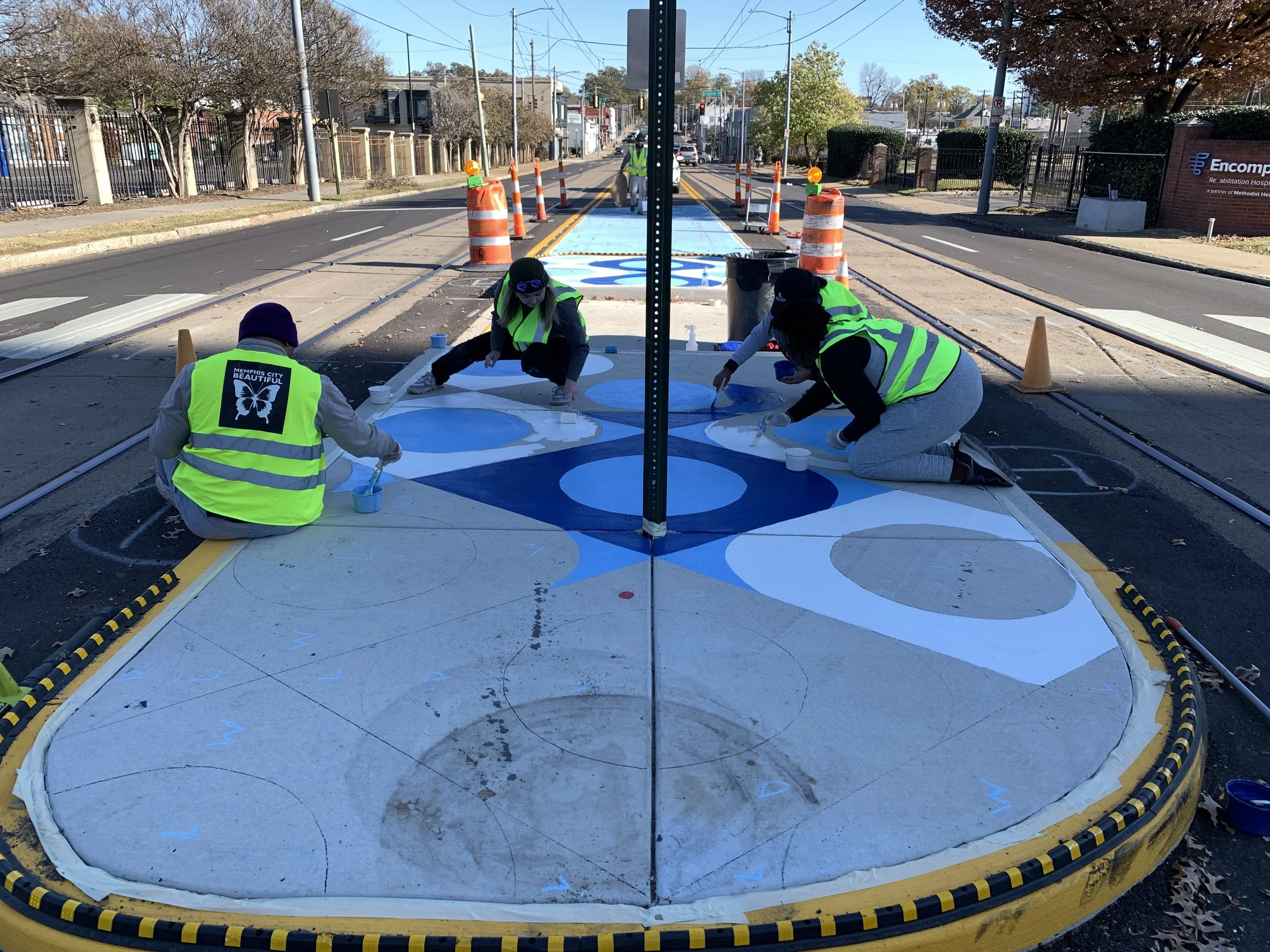
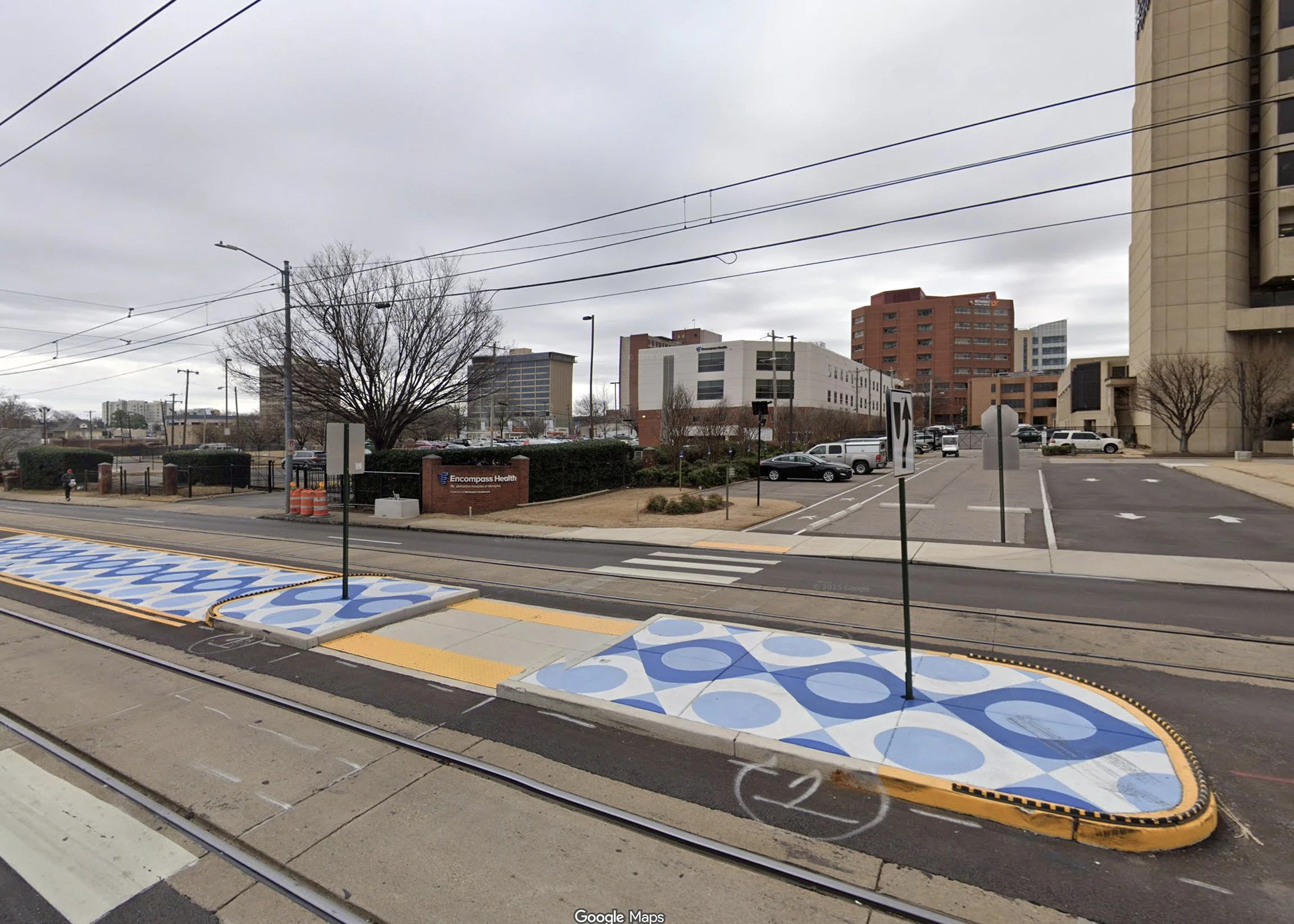
At Madison Avenue and Montgomery Street, Southern College of Optometry anchors a busy corner in the Memphis Medical District. This asphalt art project uses geometric pattern, color, and pedestrian-scale graphics to strengthen campus visibility and create a clearer sense of place along the corridor.
Designed for people moving by foot, bike, transit, and car, the work supports a safer and more vibrant streetscape while extending institutional identity into the public realm.
The Challenge
- Create a visible public artwork within an active street environment
- Reflect the identity of Southern College of Optometry and the surrounding Madison Avenue corridor
- Improve the pedestrian experience without relying on traditional signage
- Develop a design that could be installed, maintained, and refreshed over time
The Concept
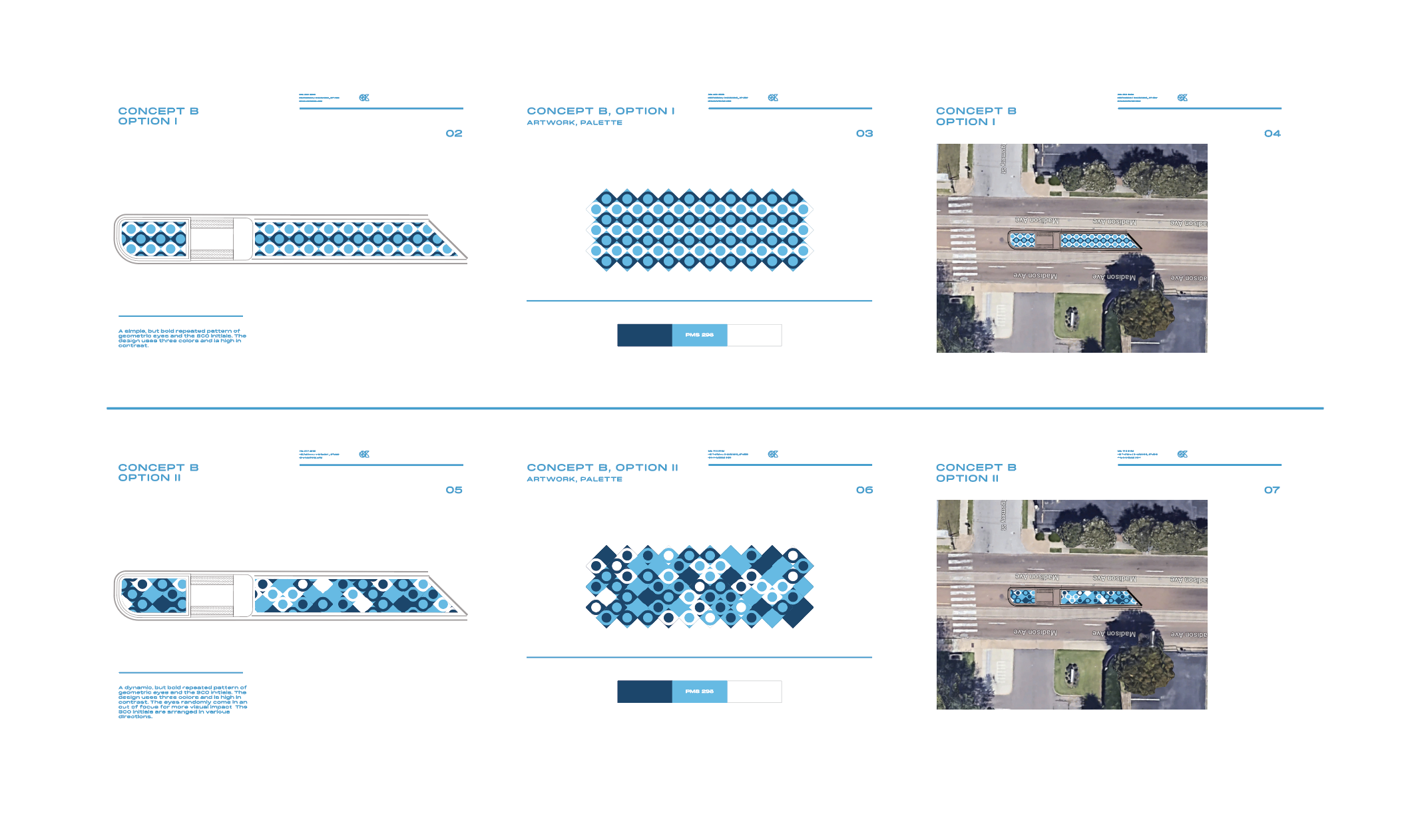
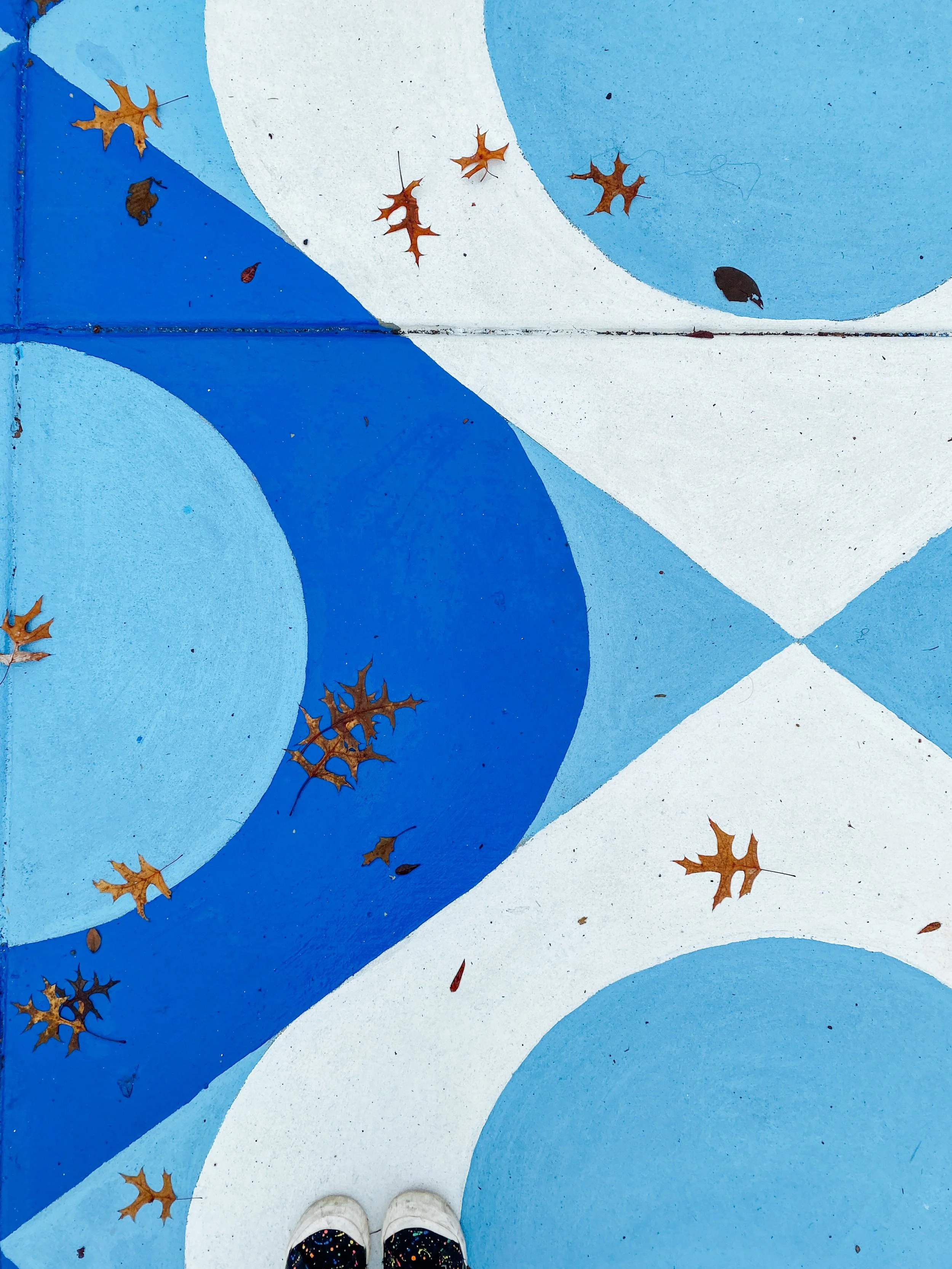
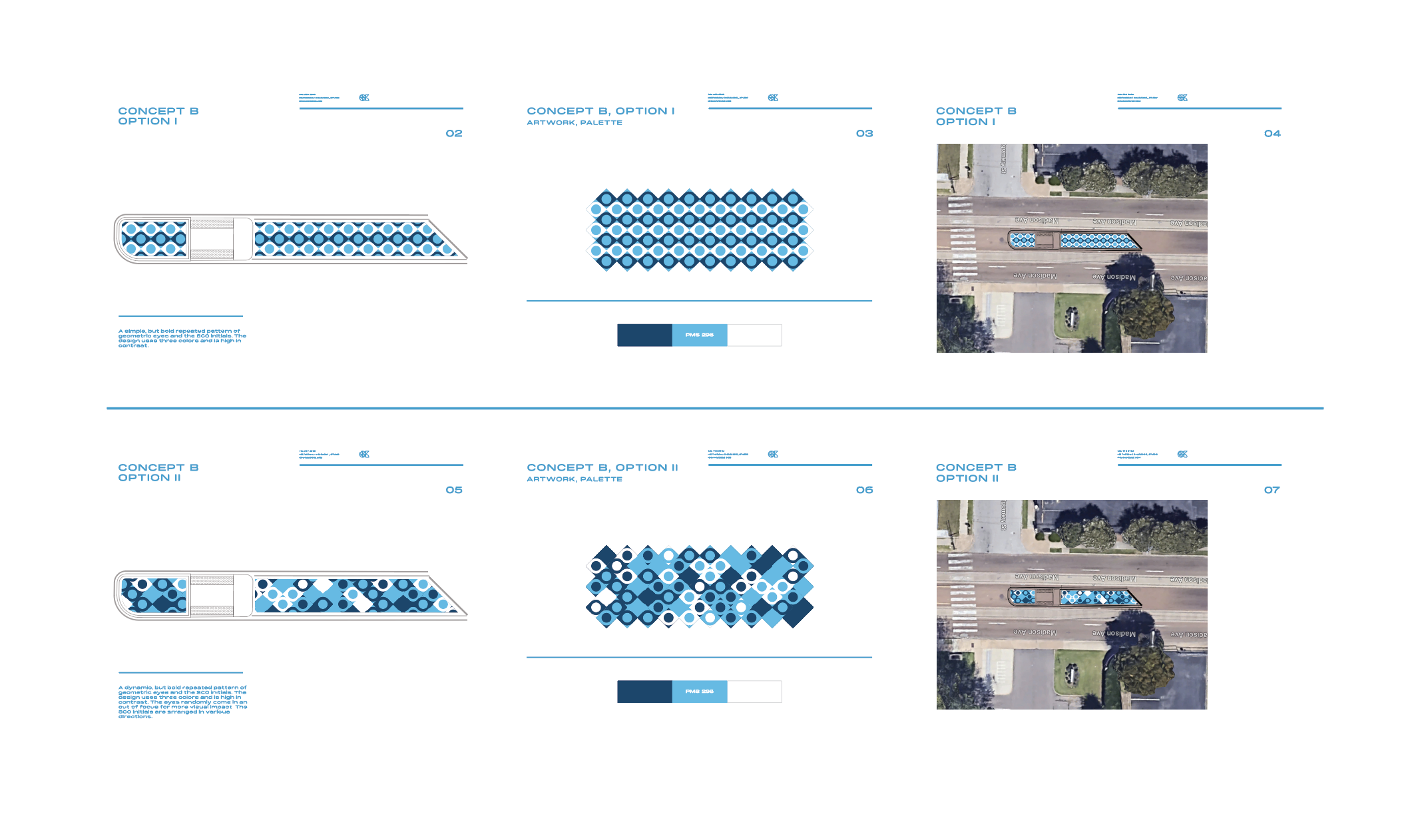
The design uses geometric pattern, repetition, and color to connect the campus edge with the movement of Madison Avenue. Rather than treating the asphalt as leftover infrastructure, the project turns the intersection into a public-facing surface for identity, rhythm, and orientation.
The work functions as both placemaking and pedestrian-scale visual intervention.
Process

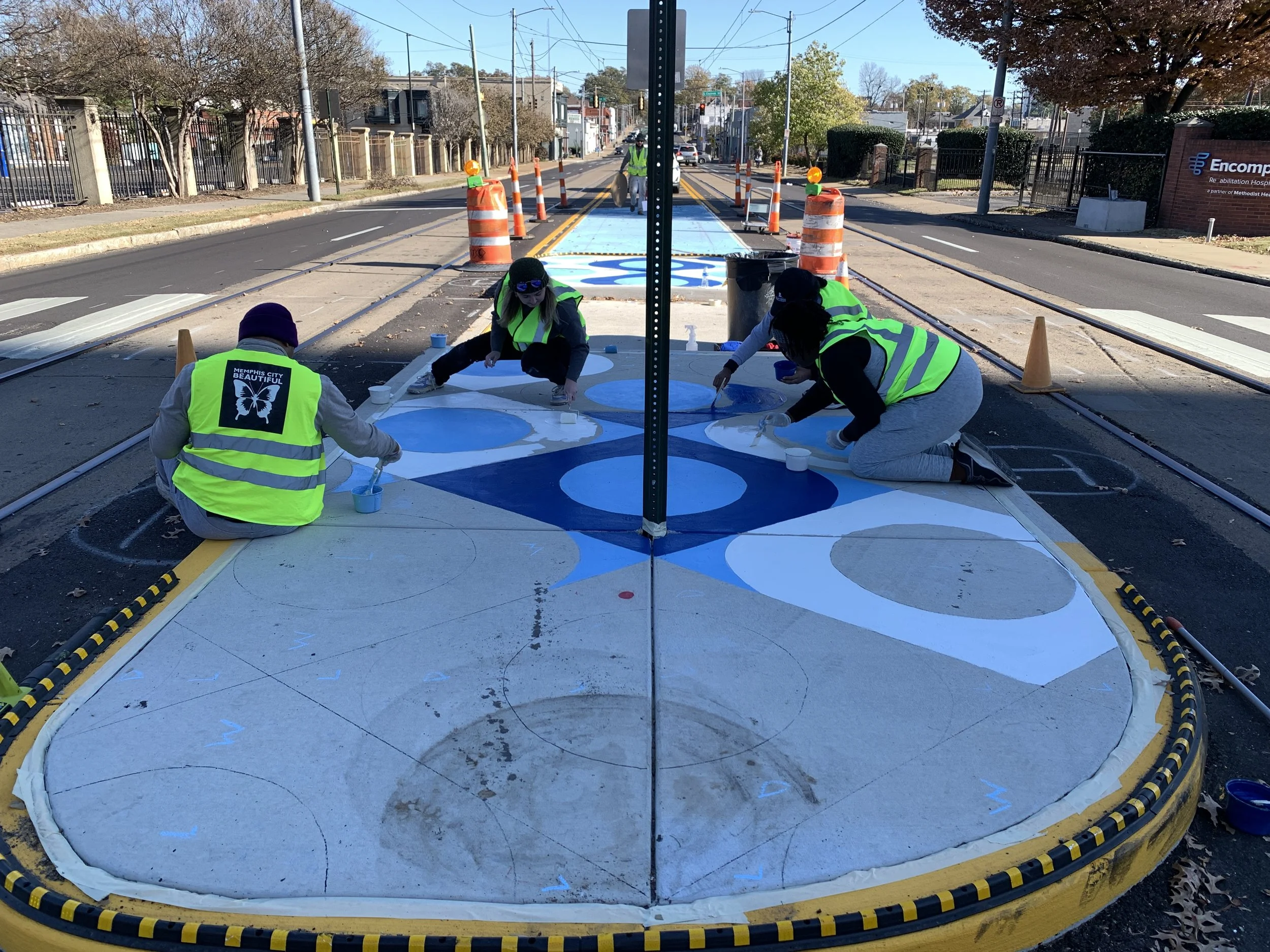
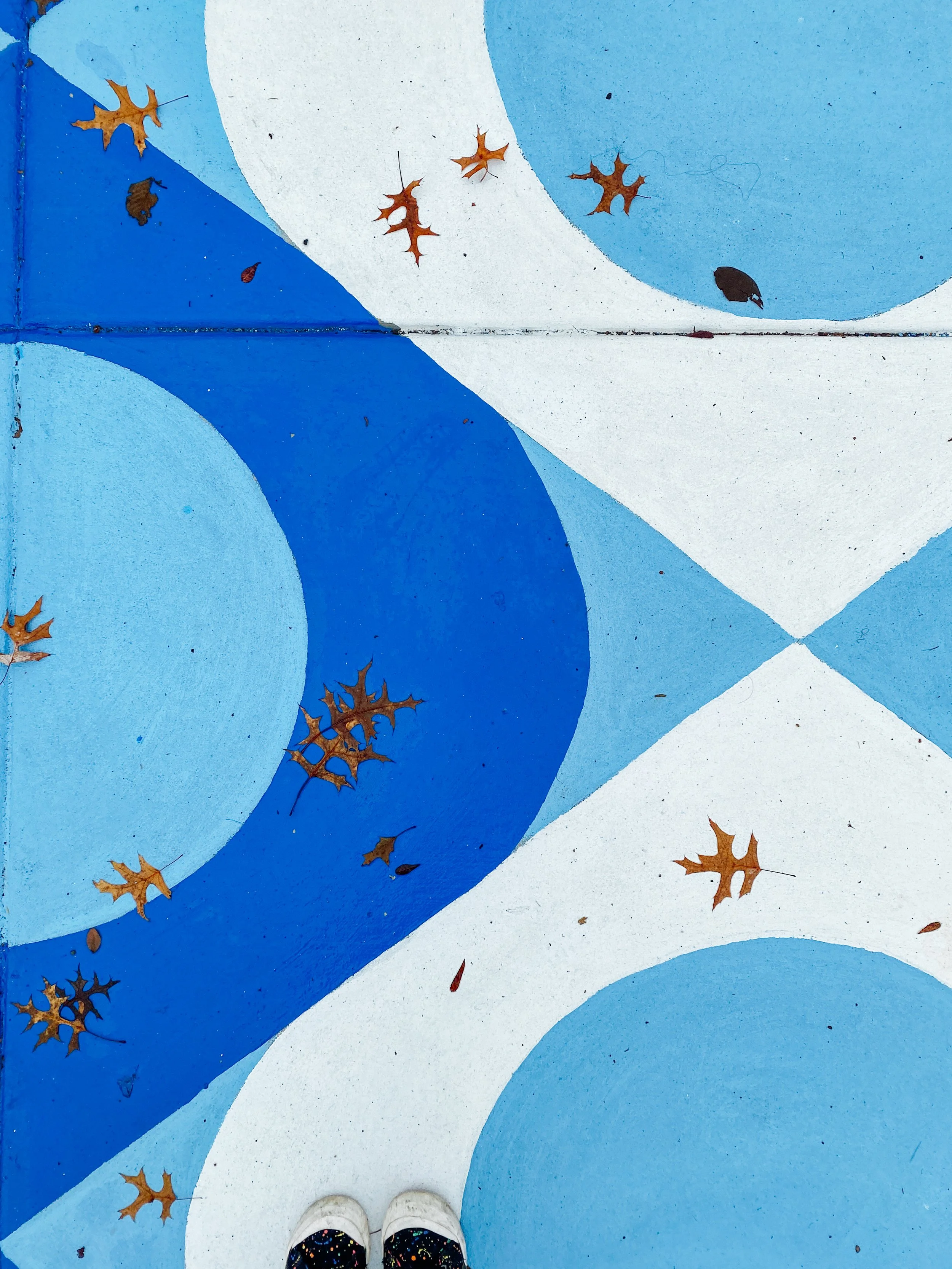
Final Outcome

Results & Impact
- Strengthened visibility at a key Madison Avenue intersection
- Extended campus identity into the public realm
- Added color, rhythm, and visual interest at pedestrian scale
- Supported a safer and more attractive Medical District streetscape
- Designed for durability and easy maintenance
Reflection
This project clarified how asphalt art can serve more than one purpose. It can identify a place, support pedestrian awareness, and make an institution feel more connected to the street. The strongest part of the process was balancing design intent with practical constraints: the final artwork had to be bold, legible, installable, and maintainable.
Case Study: Peabody Vance Neighborhood Association Crosswalks
A crosswalk series that transforms a key neighborhood intersection through responsive pattern, color, and cultural context.
Overview
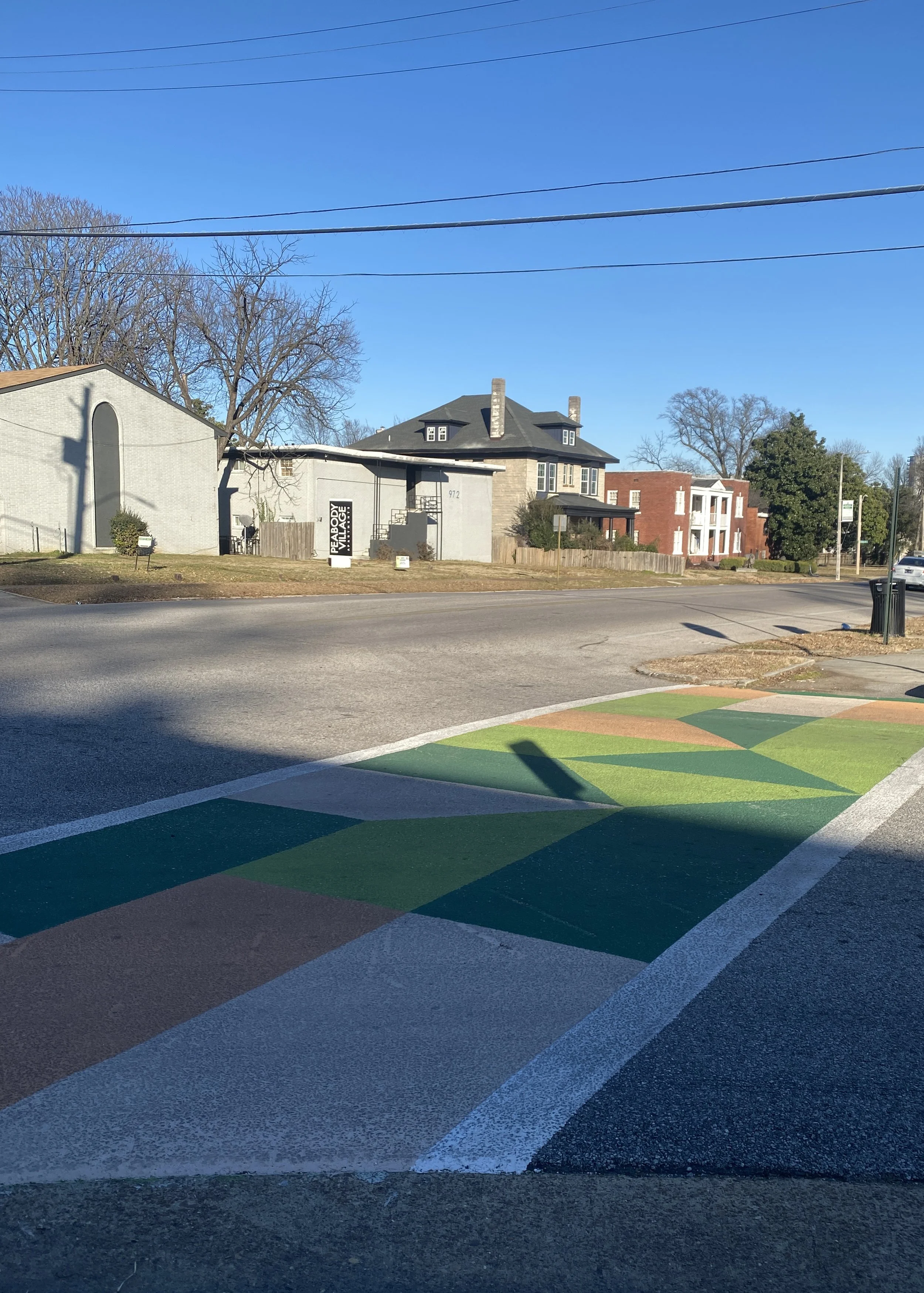
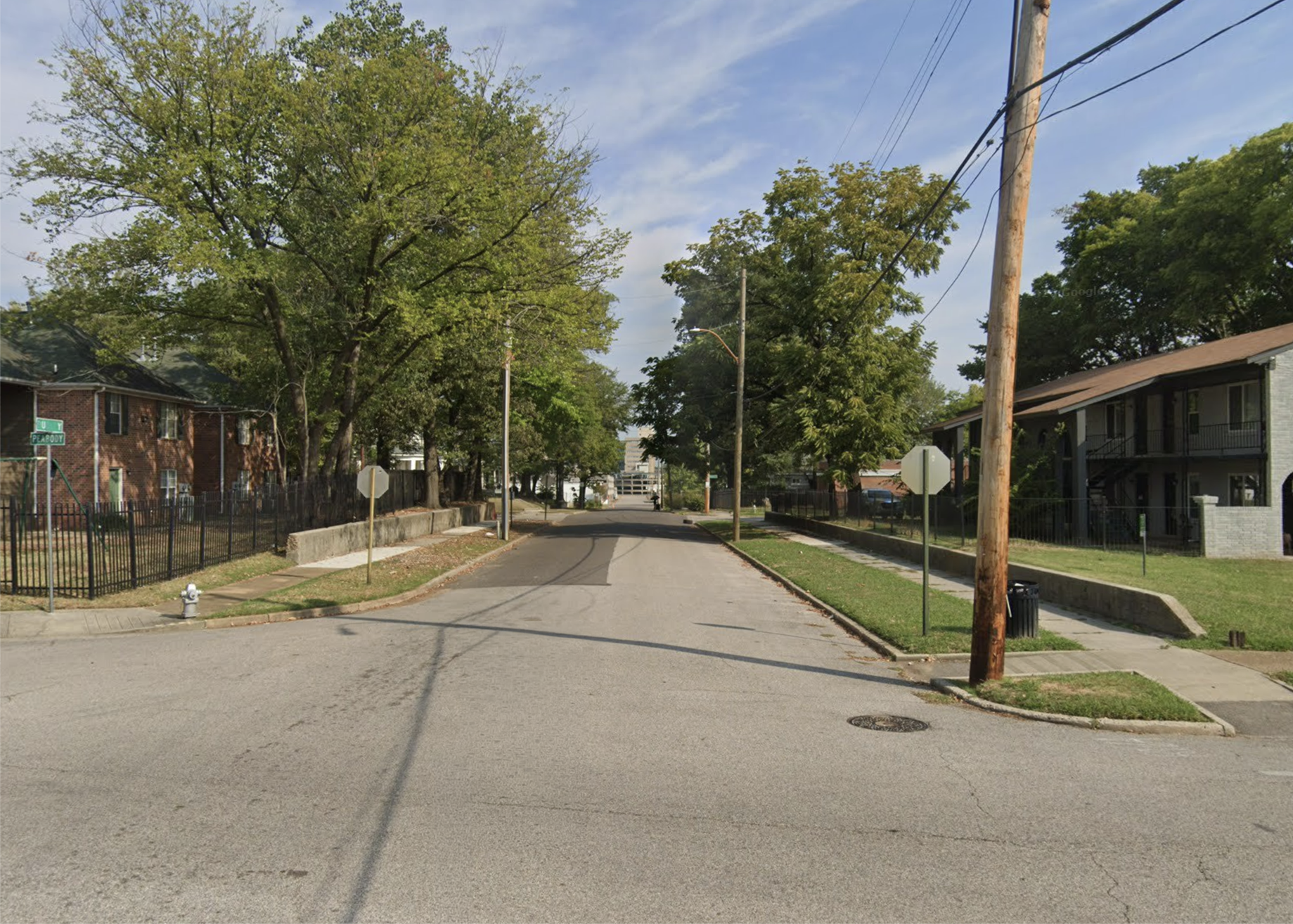
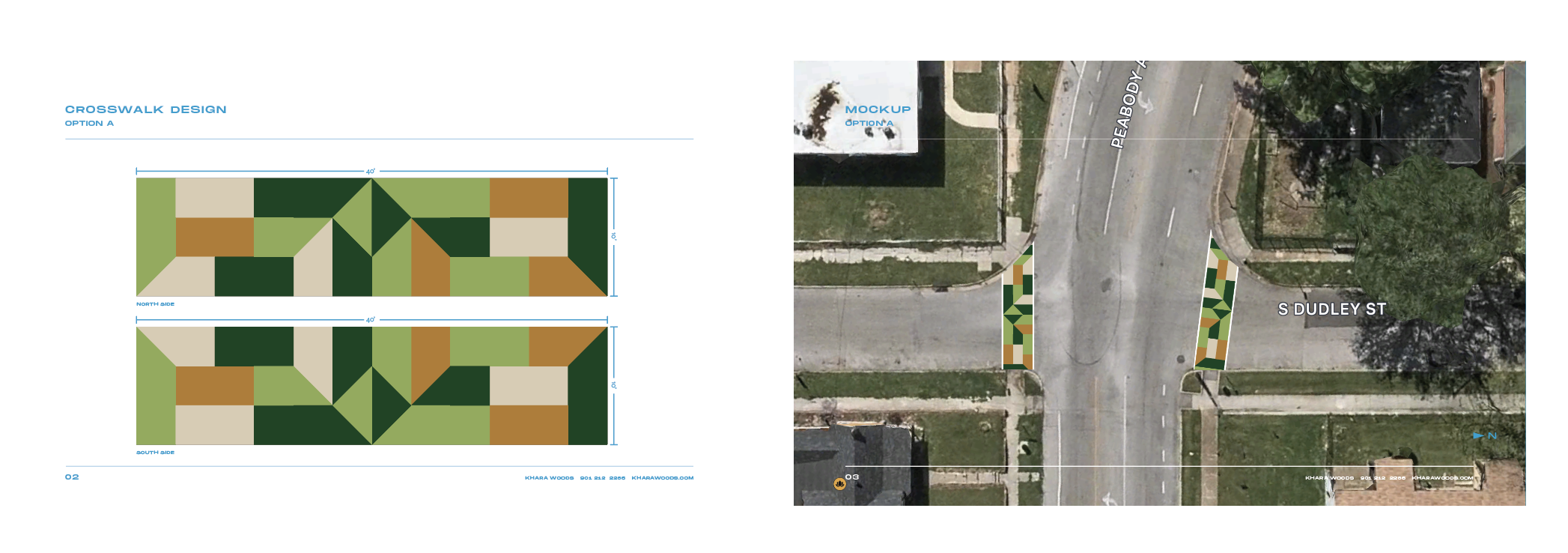
The Peabody Vance Neighborhood Crosswalks project responds to a vibrant neighborhood in flux. The intersection of Peabody Avenue and South Dudley Street sits at the heart of commercial and cultural activity. This project strengthens that intersection through visual identity while maintaining pedestrian safety and walkability.
The Challenge
- Create a visual identity that reflects the neighborhood's contemporary energy and cultural diversity
- Navigate permitting and installation requirements for public-space work
- Design a pattern system that works at pedestrian scale and overhead perspective
- Ensure durability and legibility in real-world conditions
The Concept
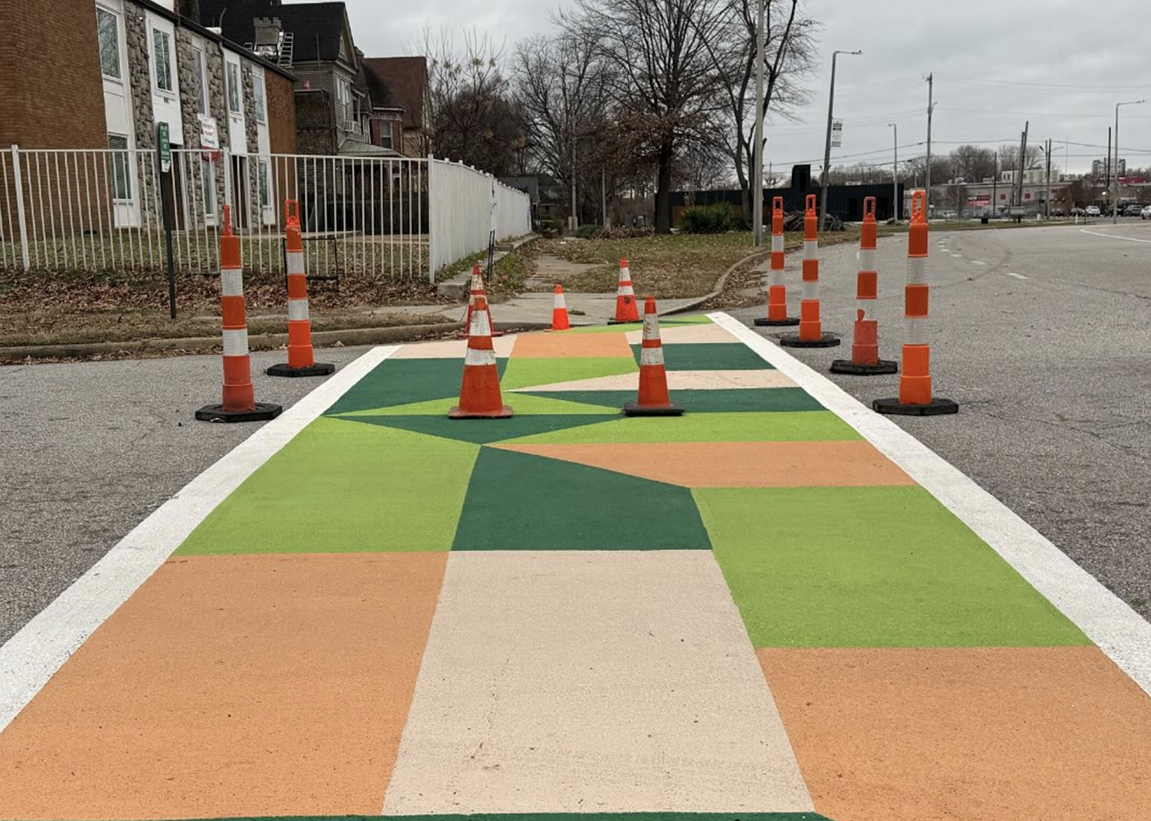
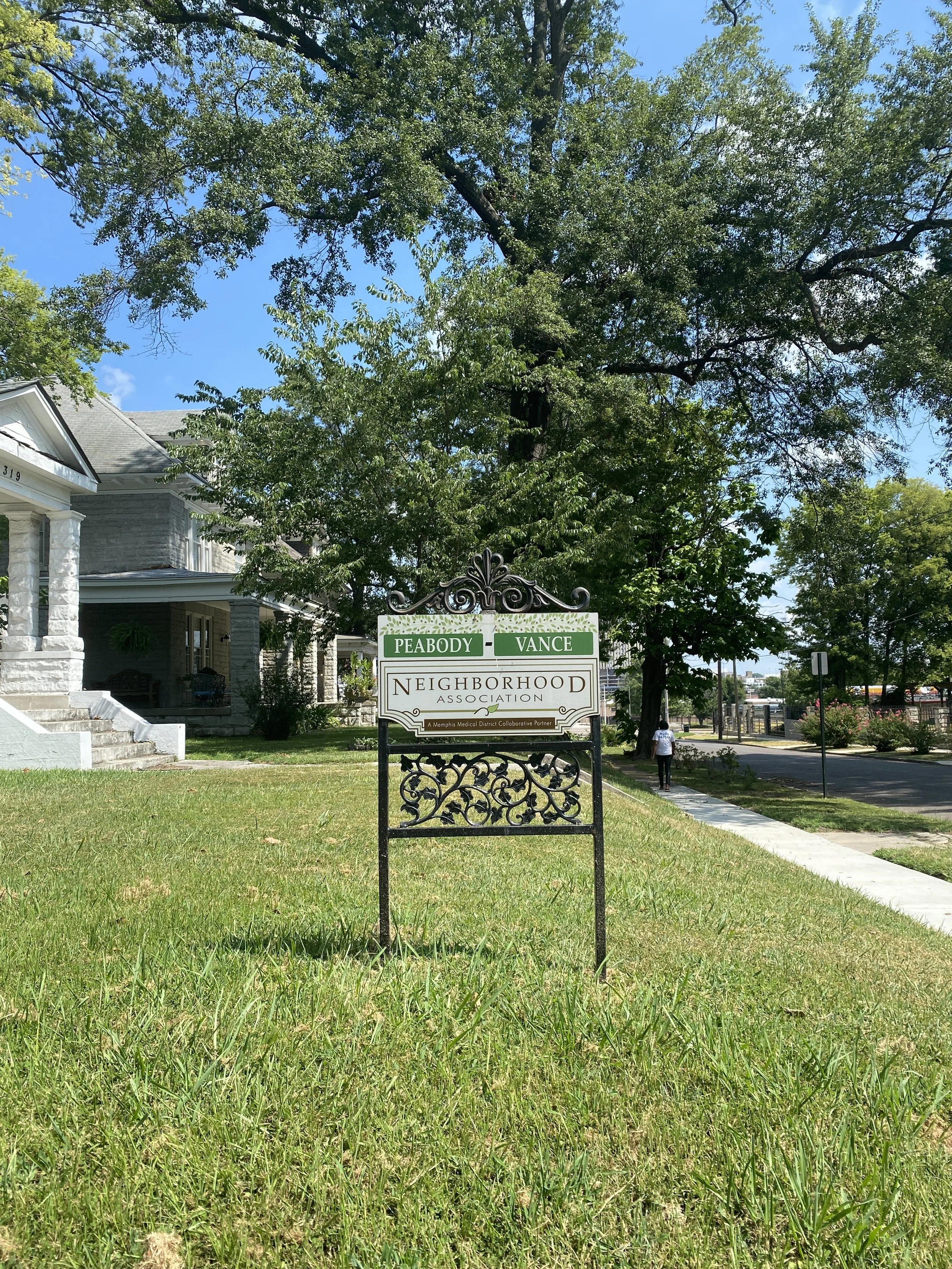
The design uses modular geometric blocks and directional diamond forms to create rhythm, movement, and visibility. Its palette draws from Peabody Vance neighborhood signage, adjusted for clarity on asphalt.
Process


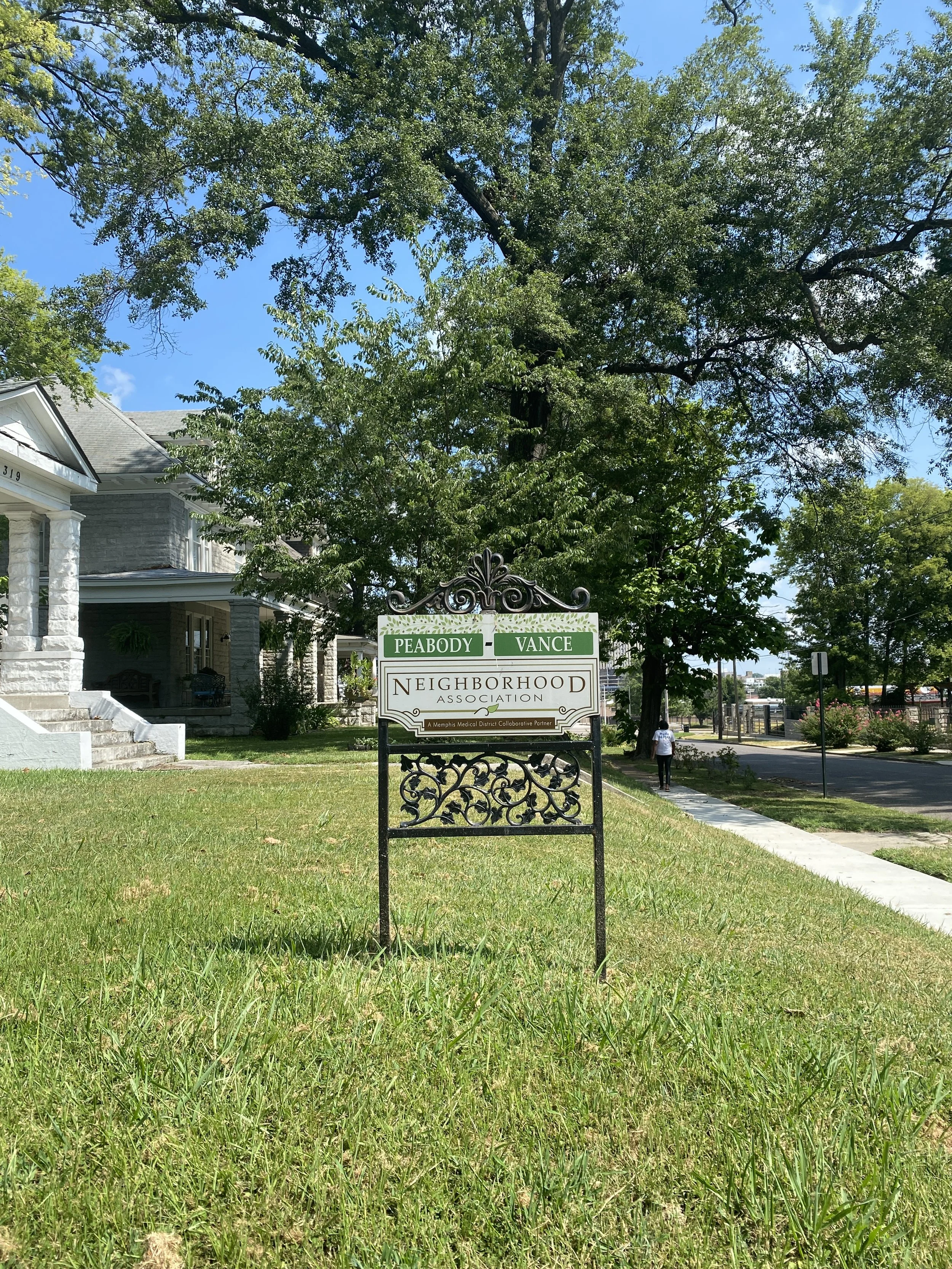
Final Outcome
The crosswalk in everyday use: StreetFairMemphis shared a clip of the finished installation in use.
View on InstagramResults & Impact
- Strengthened visual identity for the Peabody and Dudley intersection
- Enhanced pedestrian safety and crosswalk legibility
- Reflected neighborhood cultural character and contemporary energy
- Created a replicable pattern system for future interventions
Case Study: Hospitality Hub Crosswalk "Place in the Sun"
A trauma-informed crosswalk design that uses calm color, abstract geometry, and a central sun motif to create a welcoming public threshold for Hospitality Hub.
Overview
Hospitality Hub serves individuals experiencing homelessness by connecting them with resources, shelter, housing support, and care. This crosswalk design responds to the Hub’s role as a point of entry, support, and transition.
Place in the Sun uses a structured field of color and movement to create a welcoming public threshold in front of the Hub’s building on Washington Avenue.
The Challenge
- Create a crosswalk that supports calmness, visibility, and slower traffic
- Reflect the identity and mission of Hospitality Hub without relying on literal imagery
- Use trauma-informed design principles in a public street environment
- Develop a design that complies with City of Memphis crosswalk guidelines
- Balance visual warmth with a stable, predictable composition
The Concept
Place in the Sun refers to dignity, belonging, and the idea of having a rightful place. The crosswalk is designed as a passage through calm color and structured movement toward a warmer, brighter center.
Interwoven looping forms suggest the network of support surrounding individuals as they move forward, including staff, services, neighbors, and community partners. At the center, a radiating sun acts as the visual anchor, representing restoration, energy, and optimism.
Process


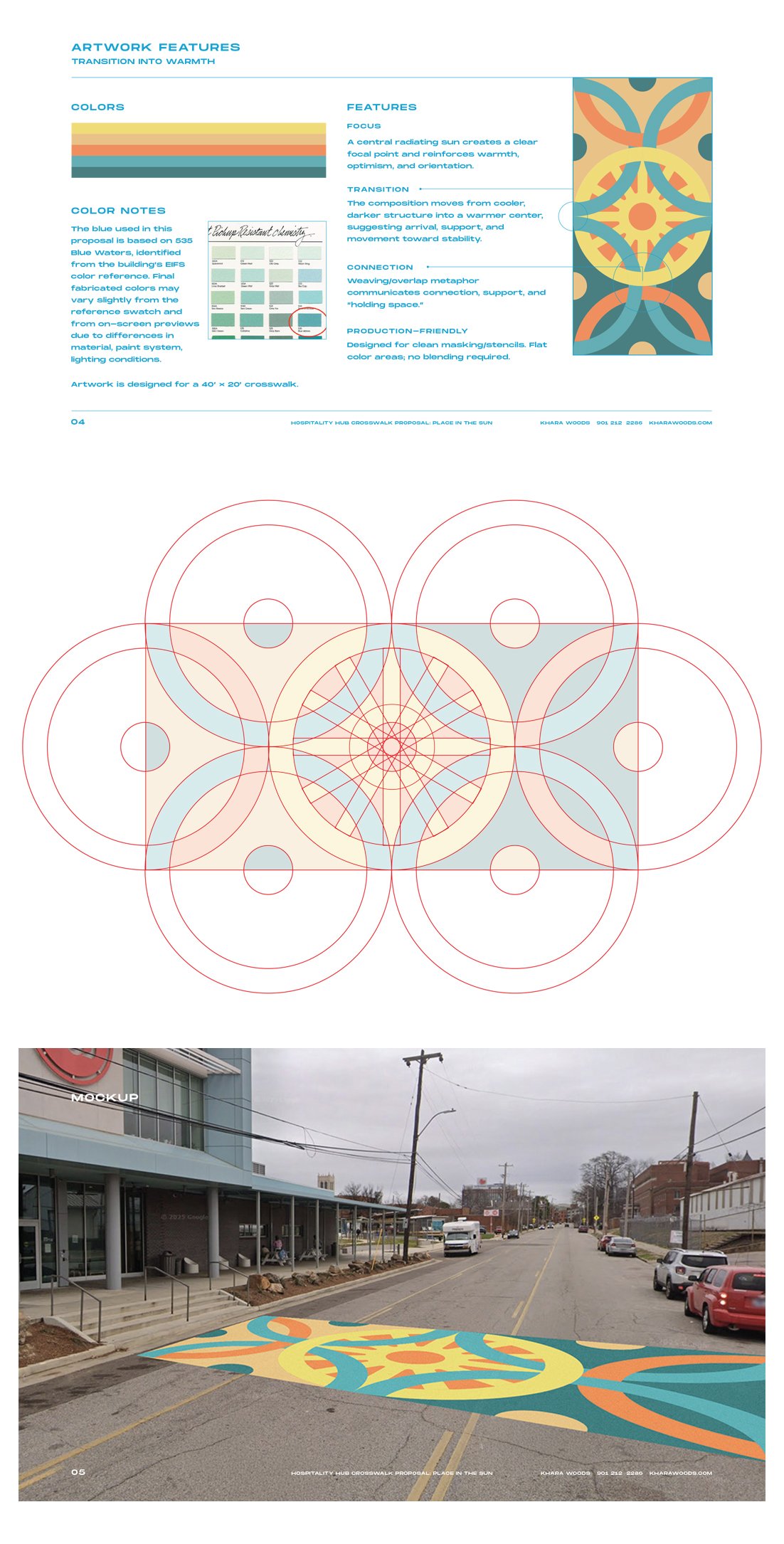
Final Approved Design

Current Status
The final design has been approved and is awaiting fabrication and installation by the production artist.
Reflection
This project required balancing emotional sensitivity with public visibility. The final design avoids harsh angles and literal imagery, using softened geometry, repetition, and a warm central focal point to support a calmer street experience while remaining clear and legible from multiple viewpoints.
Services
Crosswalk and asphalt-art design
Murals and surface graphics
Site-responsive pattern systems
Visual concept development
Presentation materials and mockups
Public-art collaboration
Aligned with Memphis 3.0
Decorative and art crosswalks are a recognized neighborhood investment option in the Memphis Community Improvement Guide, the City of Memphis's toolkit for residents and organizations planning public-space improvements. My crosswalk and asphalt-art work fits directly into this citywide framework for walkability, safety, and placemaking.
Produced by the Office of Comprehensive Planning as part of Memphis 3.0 and Accelerate Memphis, the guide outlines how neighborhoods can plan and fund public-space improvements like the projects shown above.
View the Memphis Community Improvement GuideLooking for a public-art partner?
I collaborate with municipalities, nonprofits, schools, and institutions on crosswalks, murals, and other site-responsive public-space projects. If you're planning a project and want a designer with both fine art and public-art experience, get in touch.