Following the Wood: My Visit to the NHLA
I’ve driven through this part of Memphis many times. I painted a mural for Hunter Fan just down the street, and I must have passed the National Hardwood Lumber Association (NHLA) sign dozens of times without really seeing it. Now the building feels significant.
I visited NHLA headquarters on August 31 to connect with specialists in the lumber industry. My maternal grandfather worked for the E.L. Bruce Company, and I am researching that history as I think about the future of my grandparents’ former home at 1328 Bruce Street in Orange Mound, Memphis. My dream is to transform the house into a studio space. That vision also includes building outdoor sculptures for the property, and I need to understand wood on a much deeper level to make that happen.
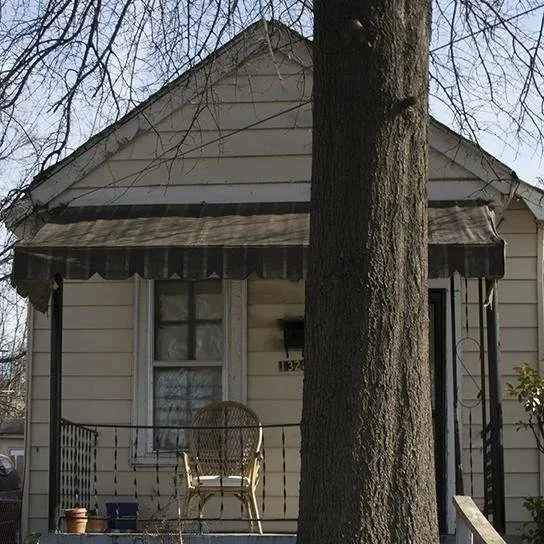
1328 Bruce St., Orange Mound, Memphis, TN
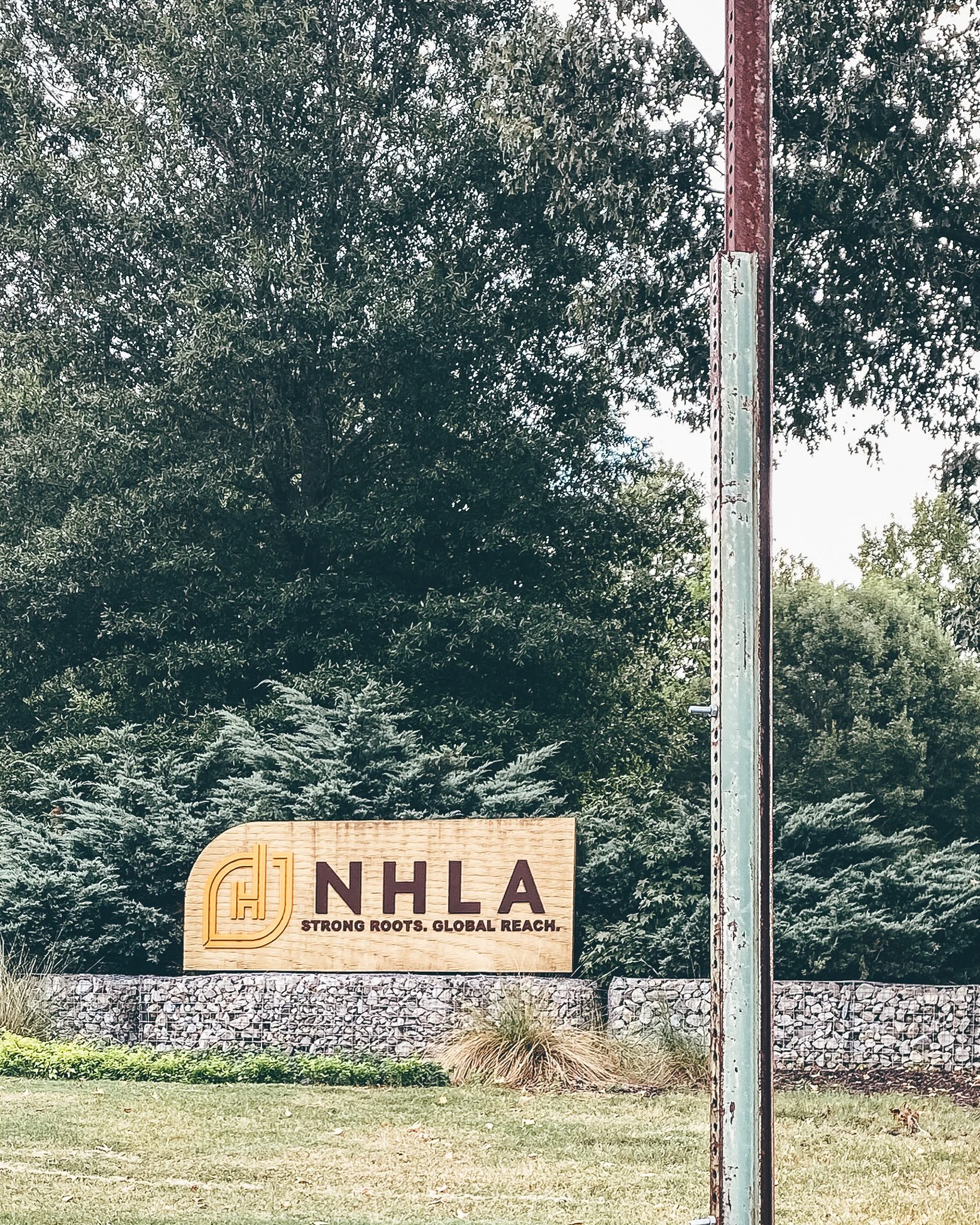
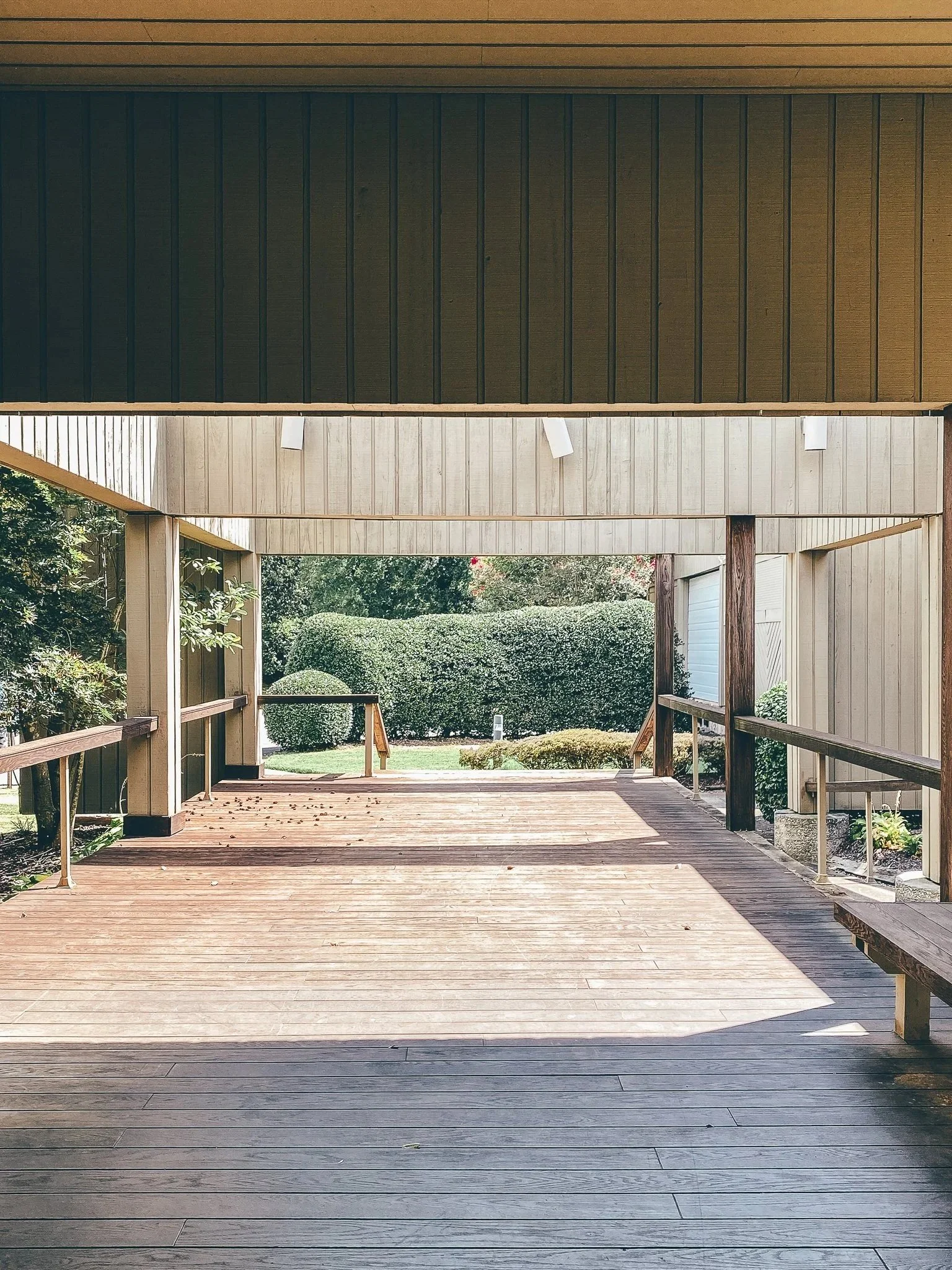
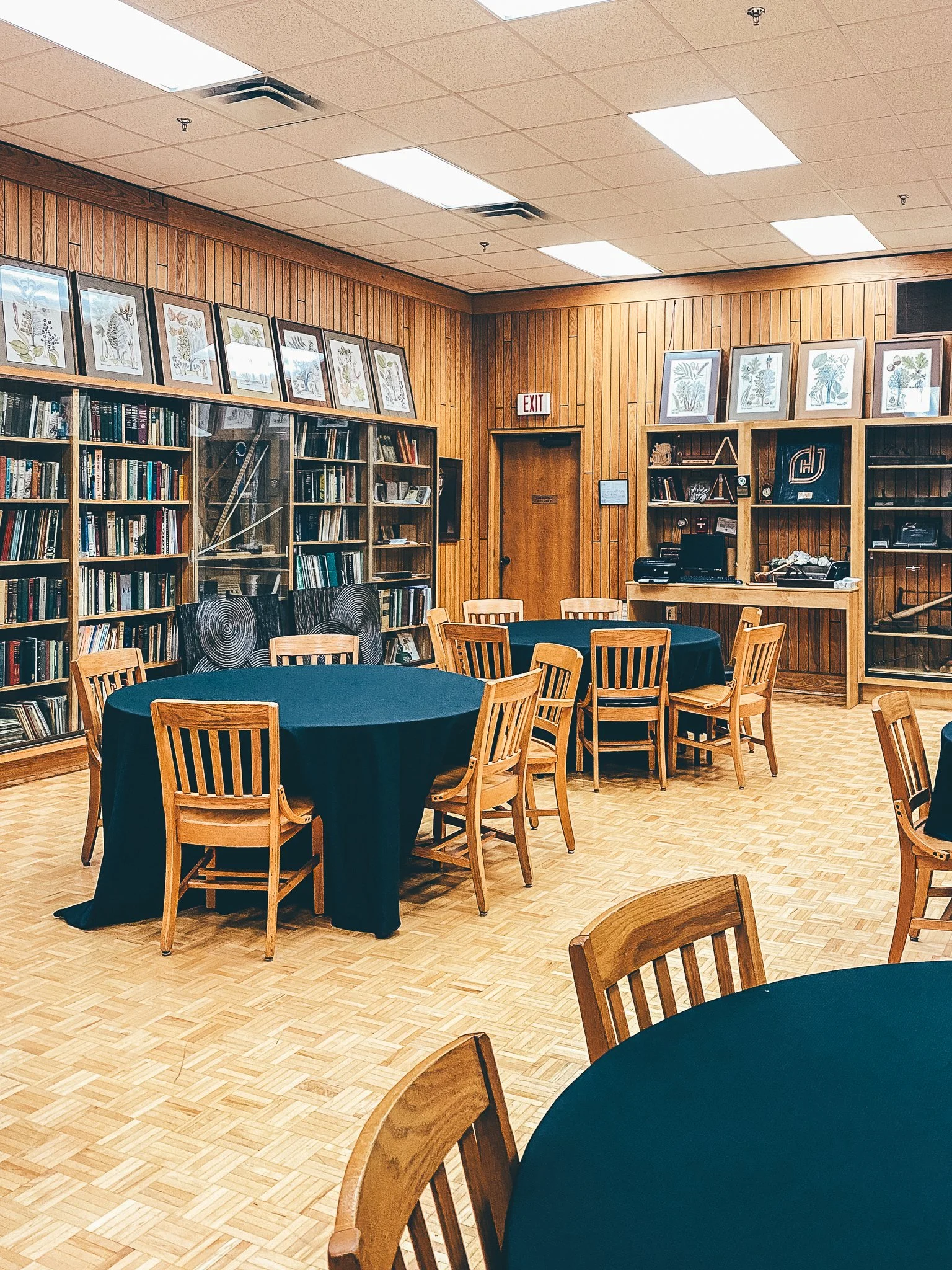
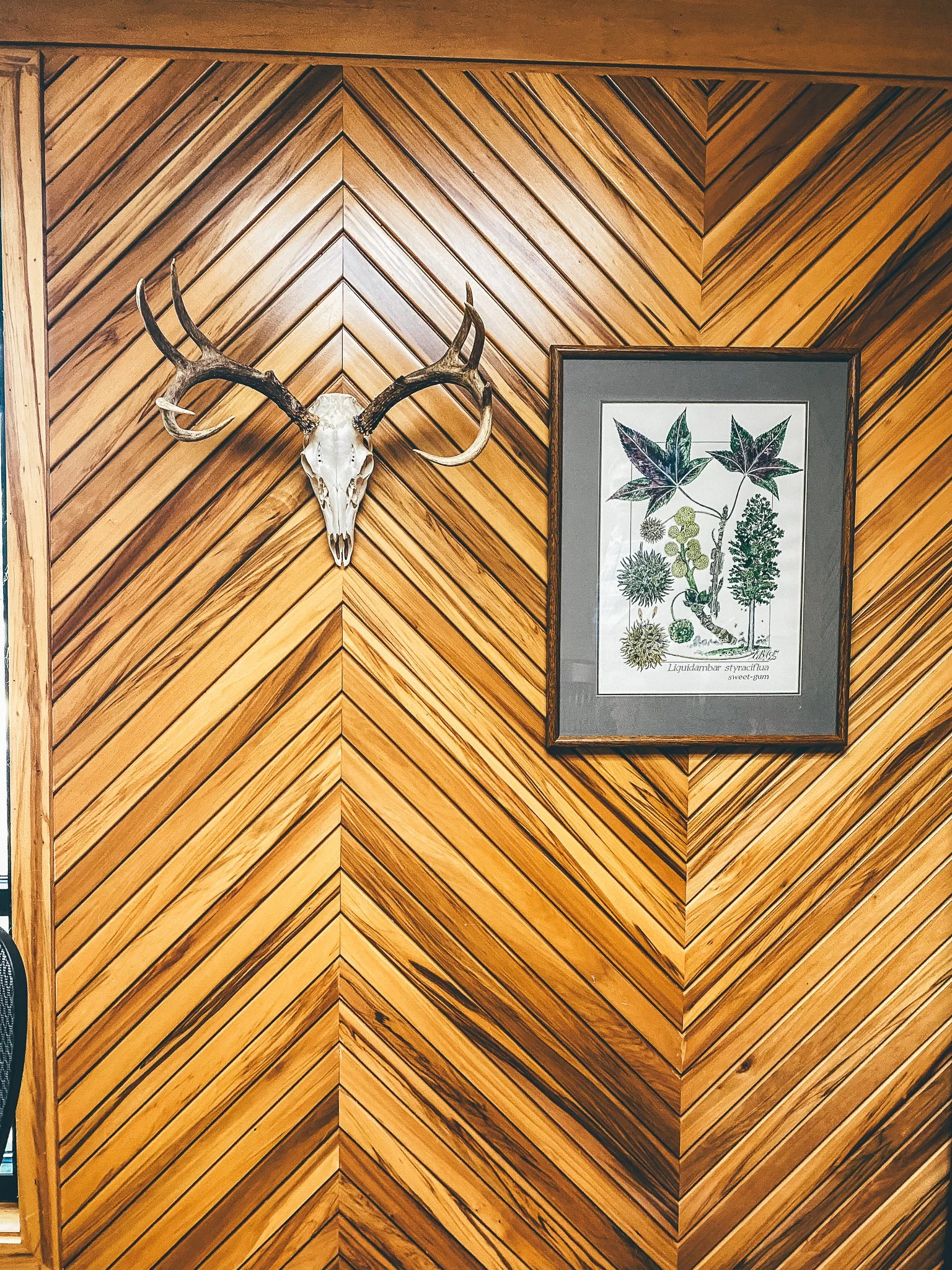
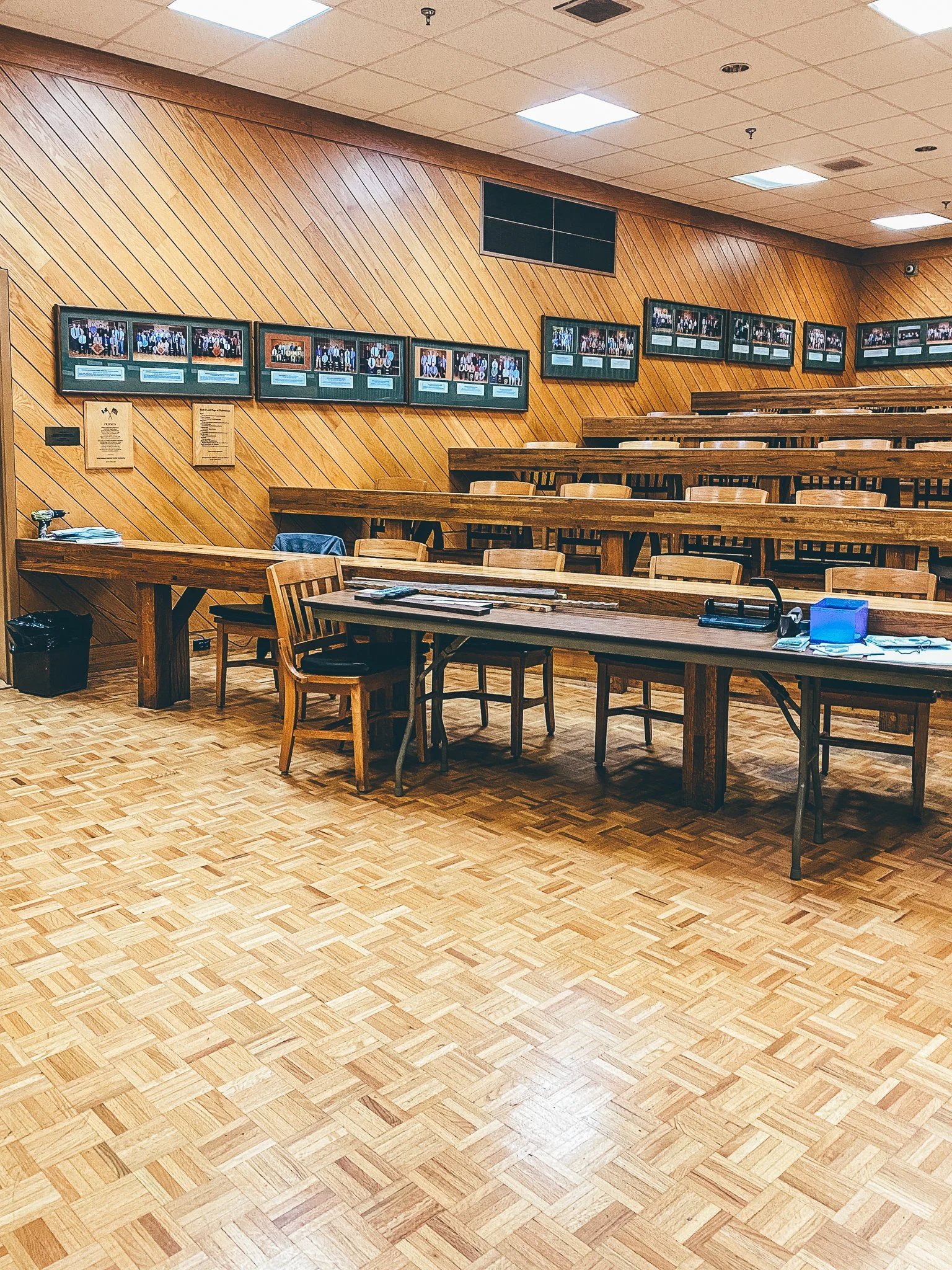
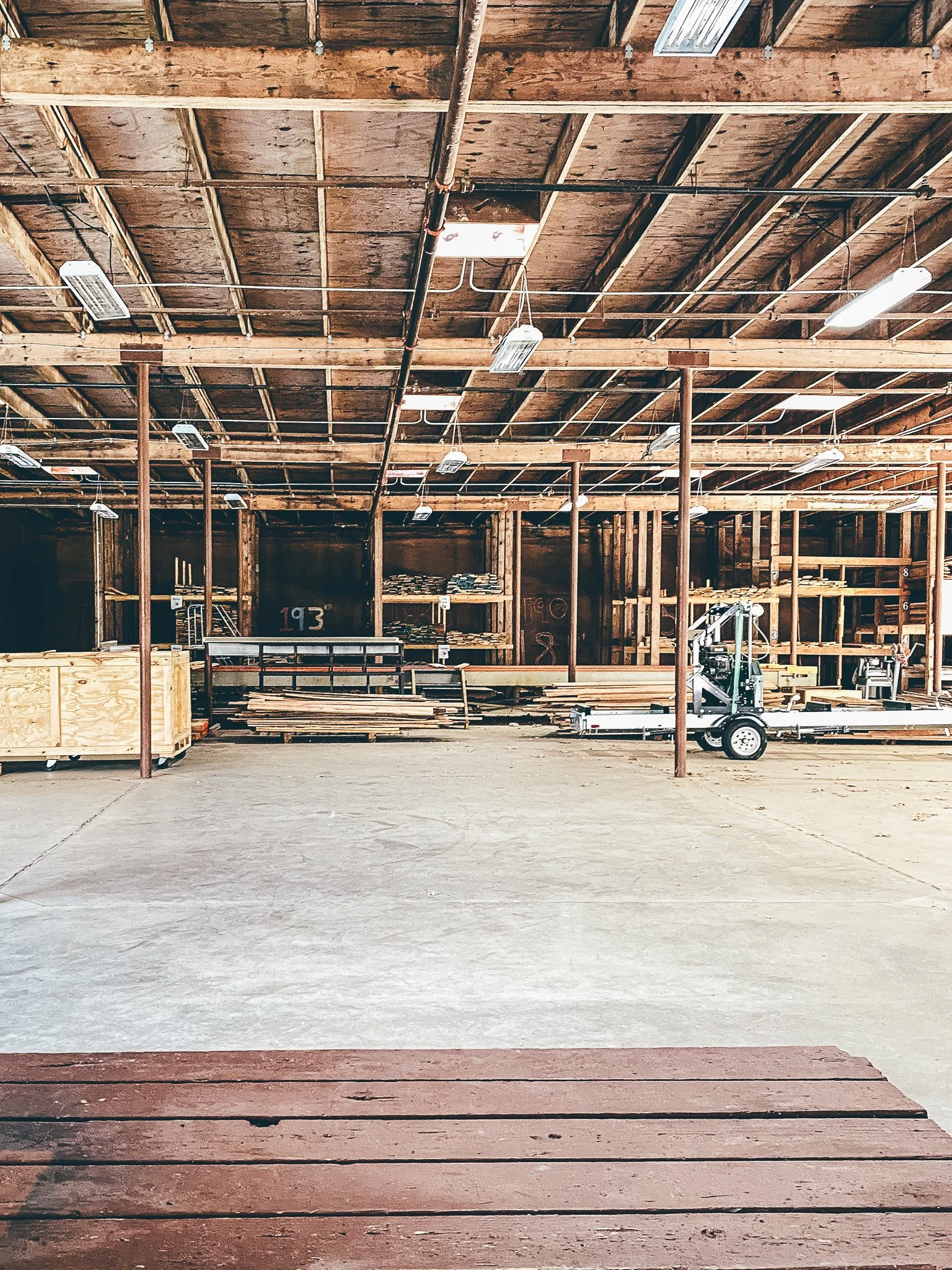
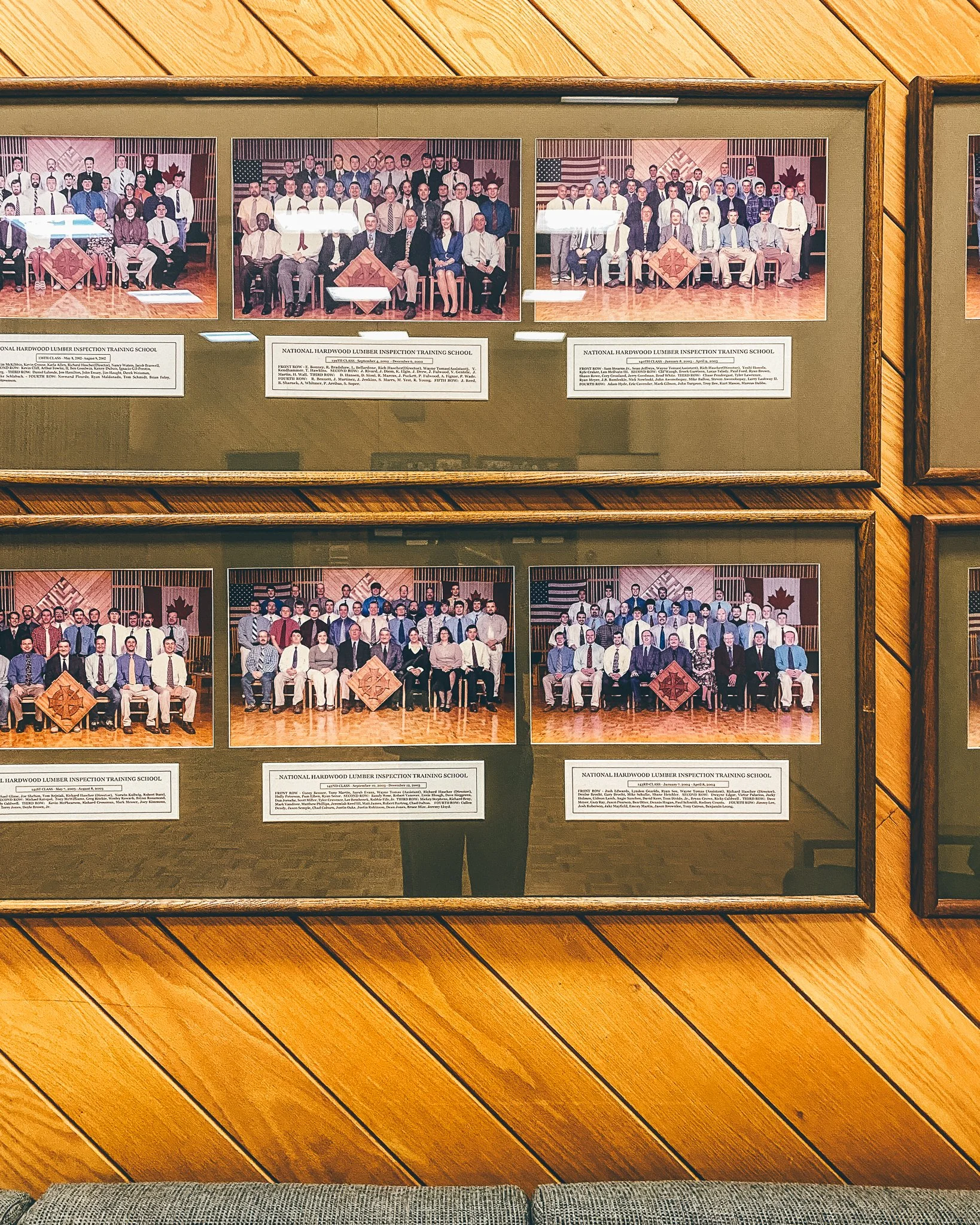
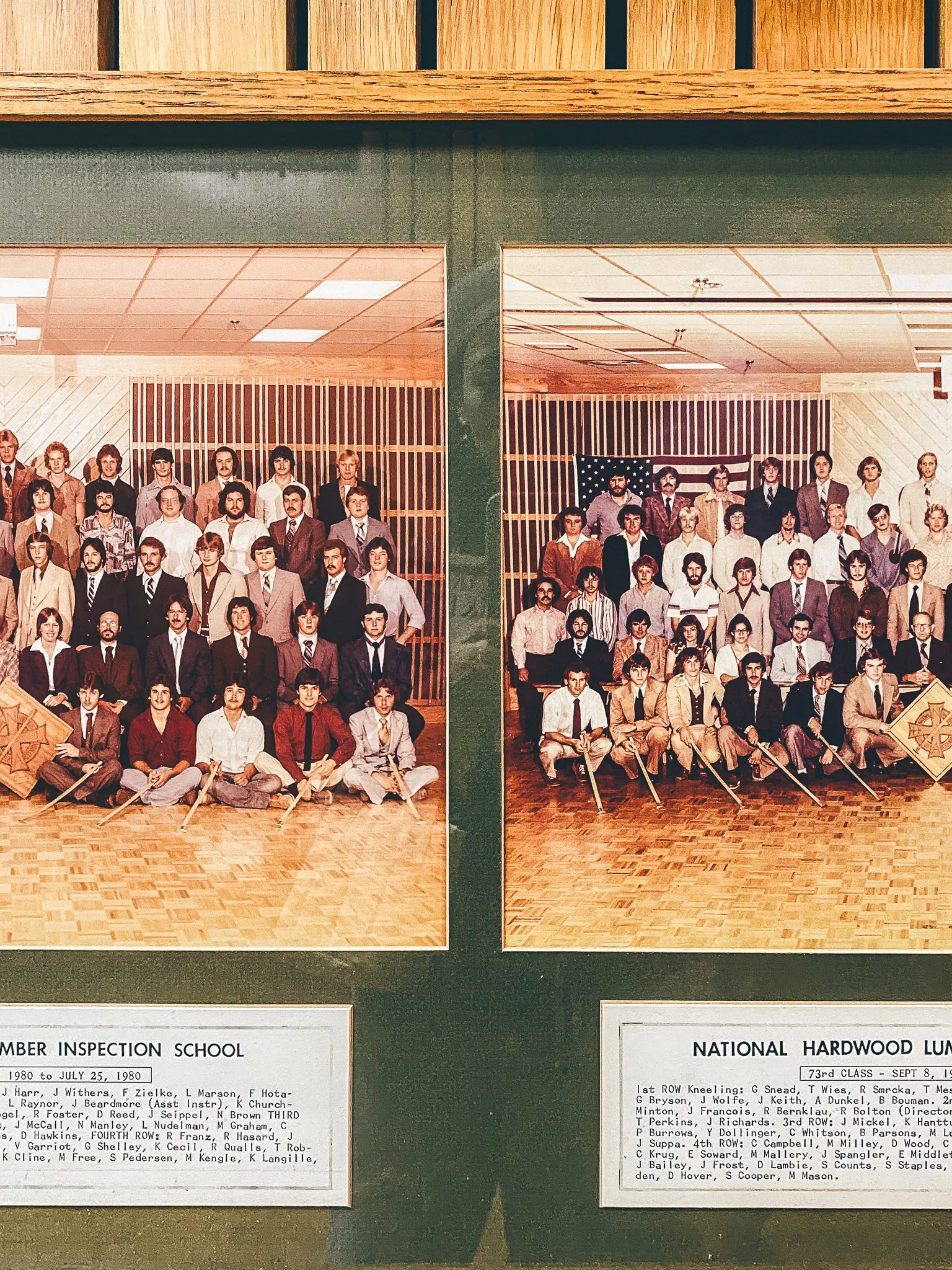
My connection to NHLA started at the new Memphis Art Museum building back in May. I was invited to tour the museum, where Melissa Whitby pointed out some of the intentional flooring choices made for the museum. I mentioned my family lumber project, and Melissa told me she had a contact I should meet. I finally emailed her in late August, thankful that she remembered our conversation, and she introduced me to Dallin Brooks.
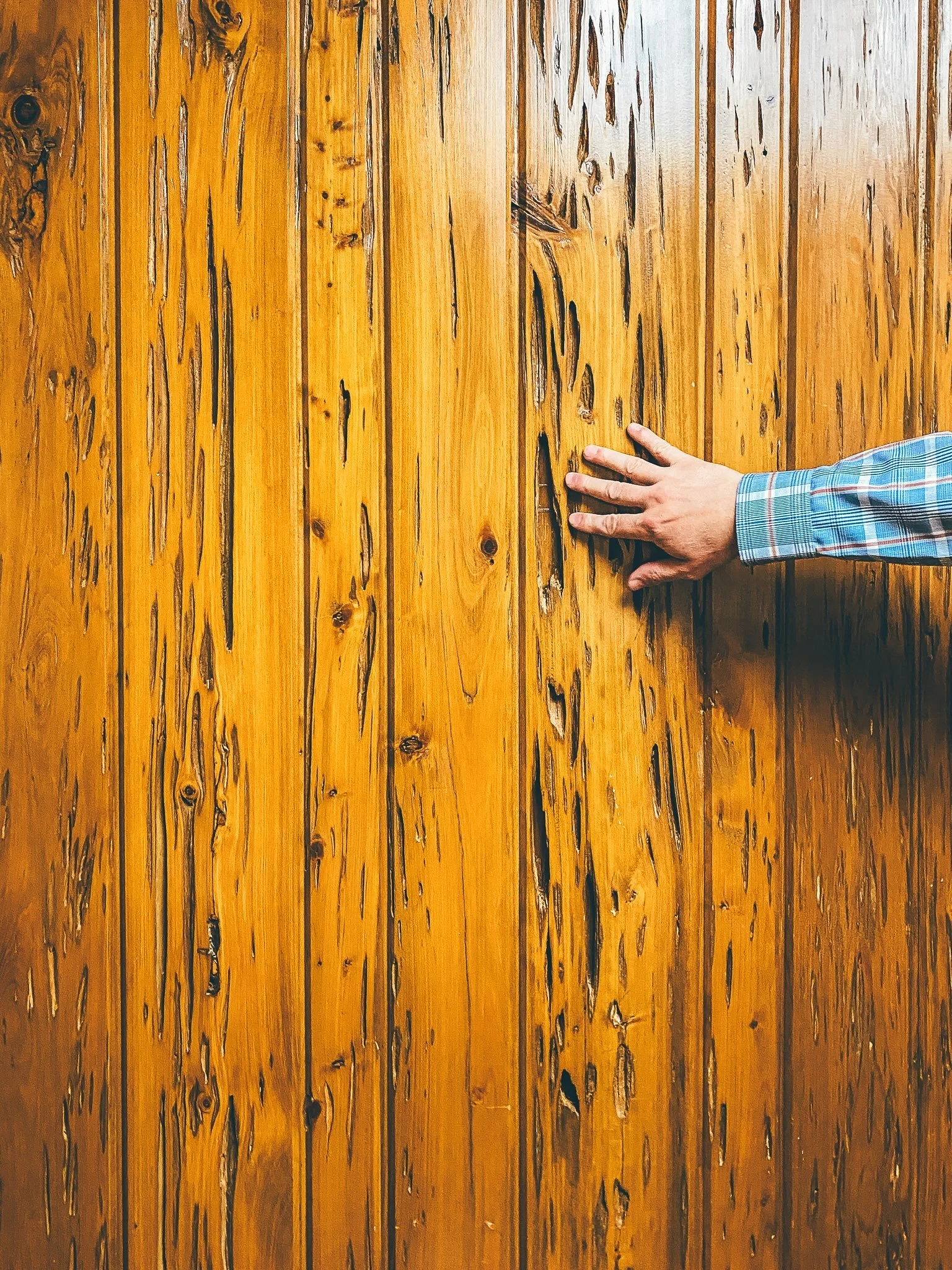
When you walk into the headquarters, you smell the wood immediately. Wood slabs cover the walls and other surfaces. Some are installed at 45-degree angles to form a chevron pattern, one of my favorites. Each office highlights a different species of wood. I remember butternut, American elm, black willow, sweet gum, Lauan, and several others.
Dallin gave me a full tour of the building, grounds, classrooms, and equipment. I saw student work, including turned wooden bowls, and a massive antique two-man crosscut saw that was hard to miss. There were shelves full of books on forests, logging, and the lumber industry. Heaven for a wood enthusiast like me.
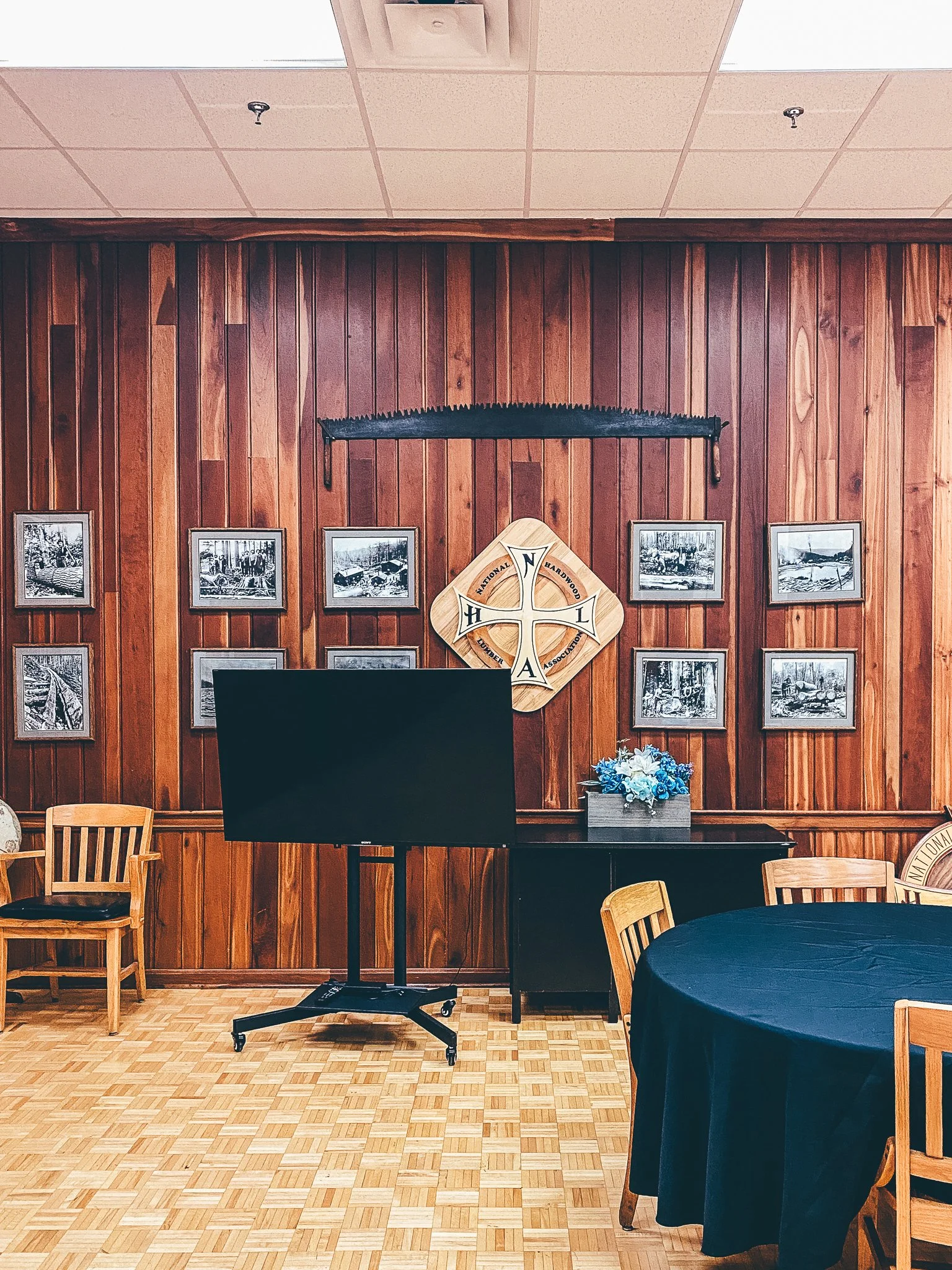
Library and meeting room at NHLA headquarters, with the antique crosscut saw mounted on paneled wall.
Before I left, he gave me a field guide to trees, something I’ve wanted for years. It is easily one of the best things I’ve received all year. I also met Brennah Hutchison, who gave me a copy of the latest issue of Hardwood & Design. I appreciated the warm welcome and the swag.
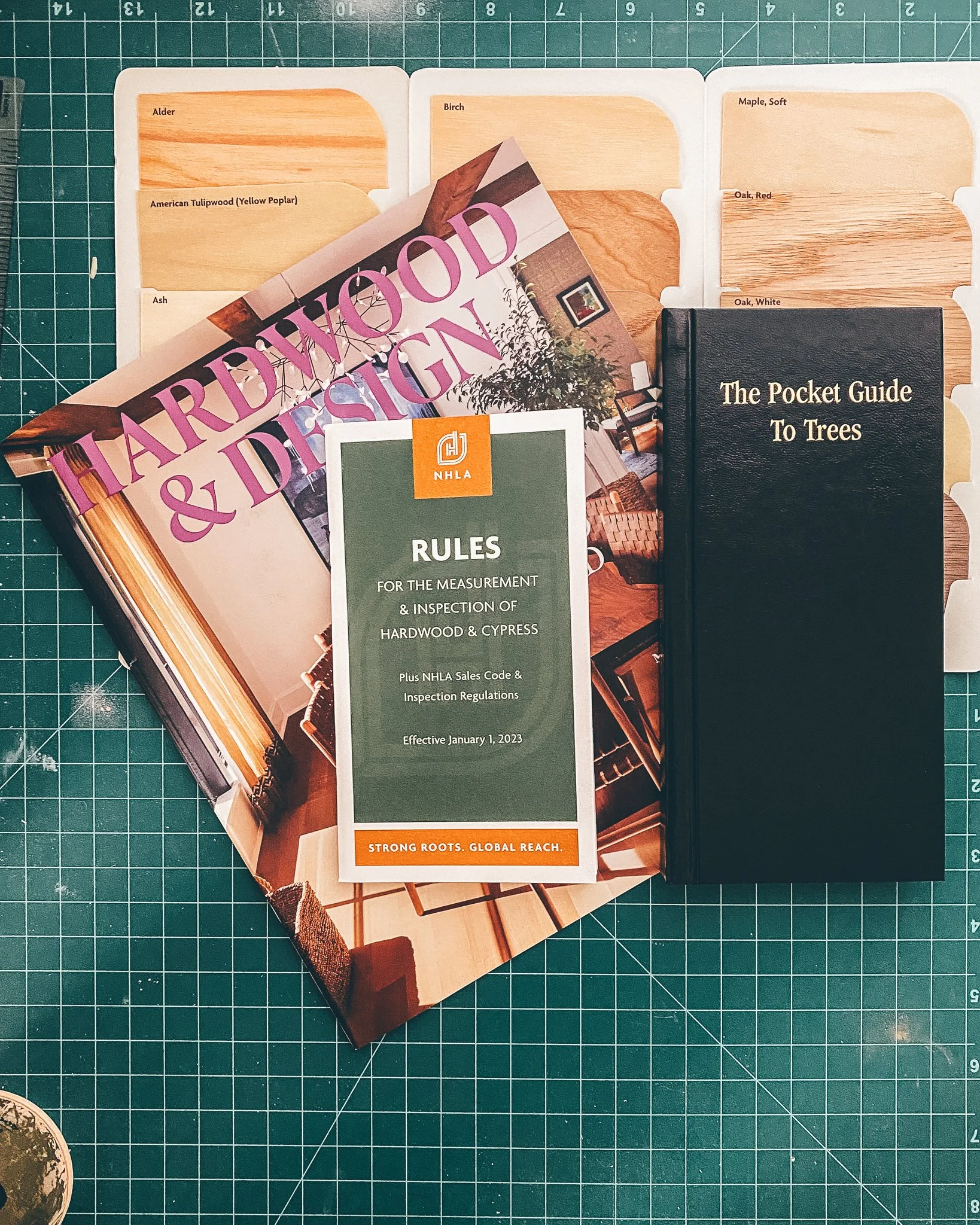
Finally, my own Pocket Guide to Trees.
I didn’t get to ask all my questions about the E.L. Bruce Company this time. I still want to learn which species perform best outdoors and how different woods weather over time. I also need to figure out what to prioritize when building outdoor sculptures. Dallin did tell me that hickory is stronger than oak, which I’m filing away for later.
For years, I have relied on salvaged lumber because it was available and visually interesting. Now I want to understand more about where the material comes from and how different species behave. I also want to explore how Memphis, and perhaps Orange Mound specifically, fit into the broader hardwood industry.
This visit was the perfect start to that education. I plan to go back. Probably more than once.
Working With What I Have
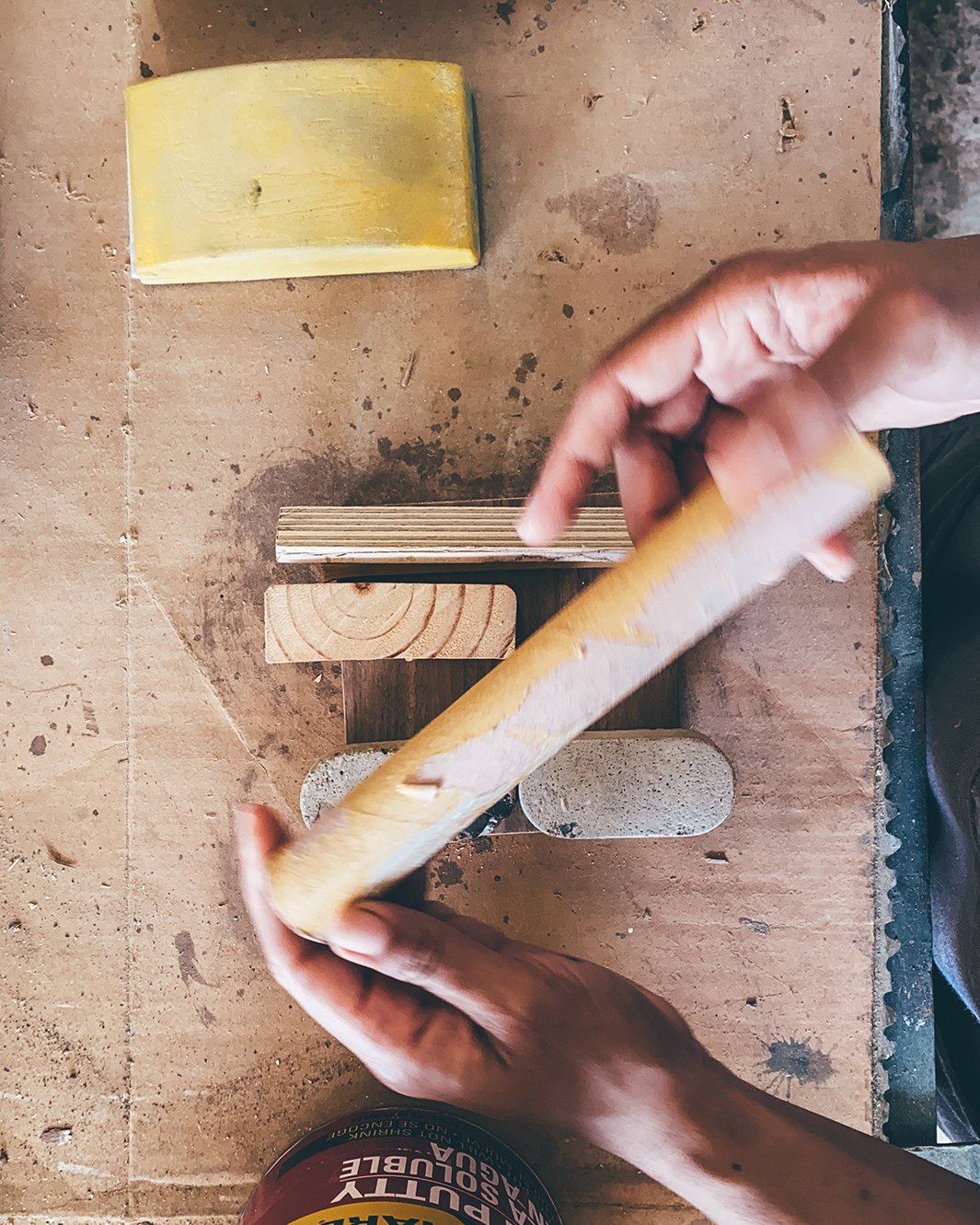
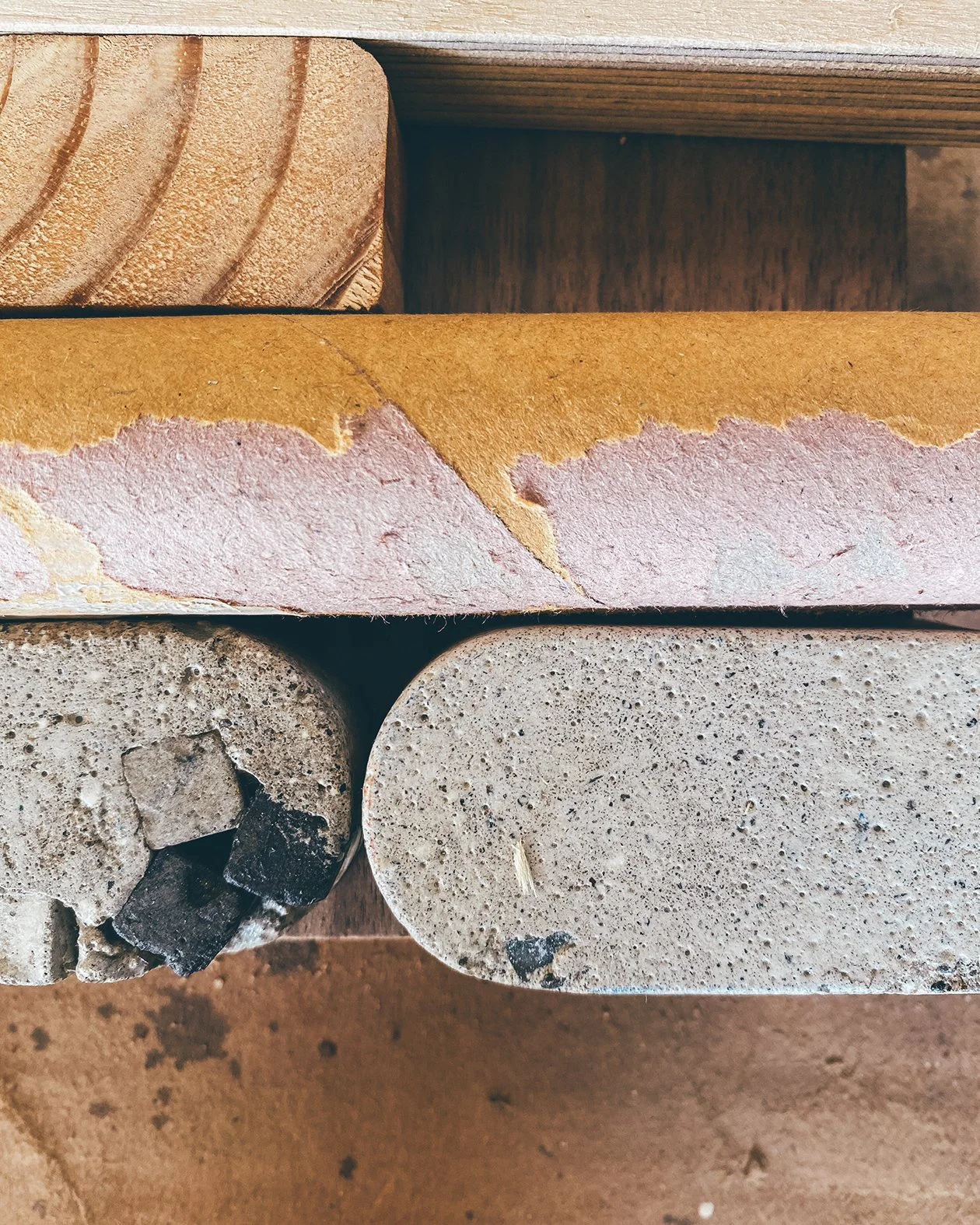
Lately, I’ve been thinking a lot about the materials I keep around my workspace and why I keep returning to them.
Naturally, wood remains my primary material. A lot of it comes from scrap pieces I’ve found or that have been given to me. When I had my studio at Marshall Arts, a friend dropped off leftover wood from the Kinfolk restaurant in Harbor Town, and I’m actually still working through those pieces right now.
I’m also pulling from the environment around me: dried bamboo reeds that fall from along my backyard fence, cardboard tubes from paper towels, and even the empty rolls from masking tape. I also have these concrete pieces I made back during the pandemic. For a long time, they just sat there. Sometimes you have to let things rest for a few years until you finally have that lightbulb moment, and then it’s time to find a way to merge them with the wood.

My process usually starts with a backing piece or substrate. I love anything modular, so that substrate acts as my grid. I just imagine how to align everything vertically and horizontally, placing objects along those invisible, imaginary lines until the arrangement looks right. Because I’m not using much color right now, the focus is entirely on form, material, and how things sit in proximity to one another. (I do have some copper wire and steel pipes sitting prominently in my work area, just floating around in the back of my mind until an idea for them solidifies).
One thing I am pushing myself to think more about is how to give more meaning to these wall reliefs. I'm exploring how I can use relics, artifacts, or elements of my family history to imbue more personal significance into each piece.
Material Memory
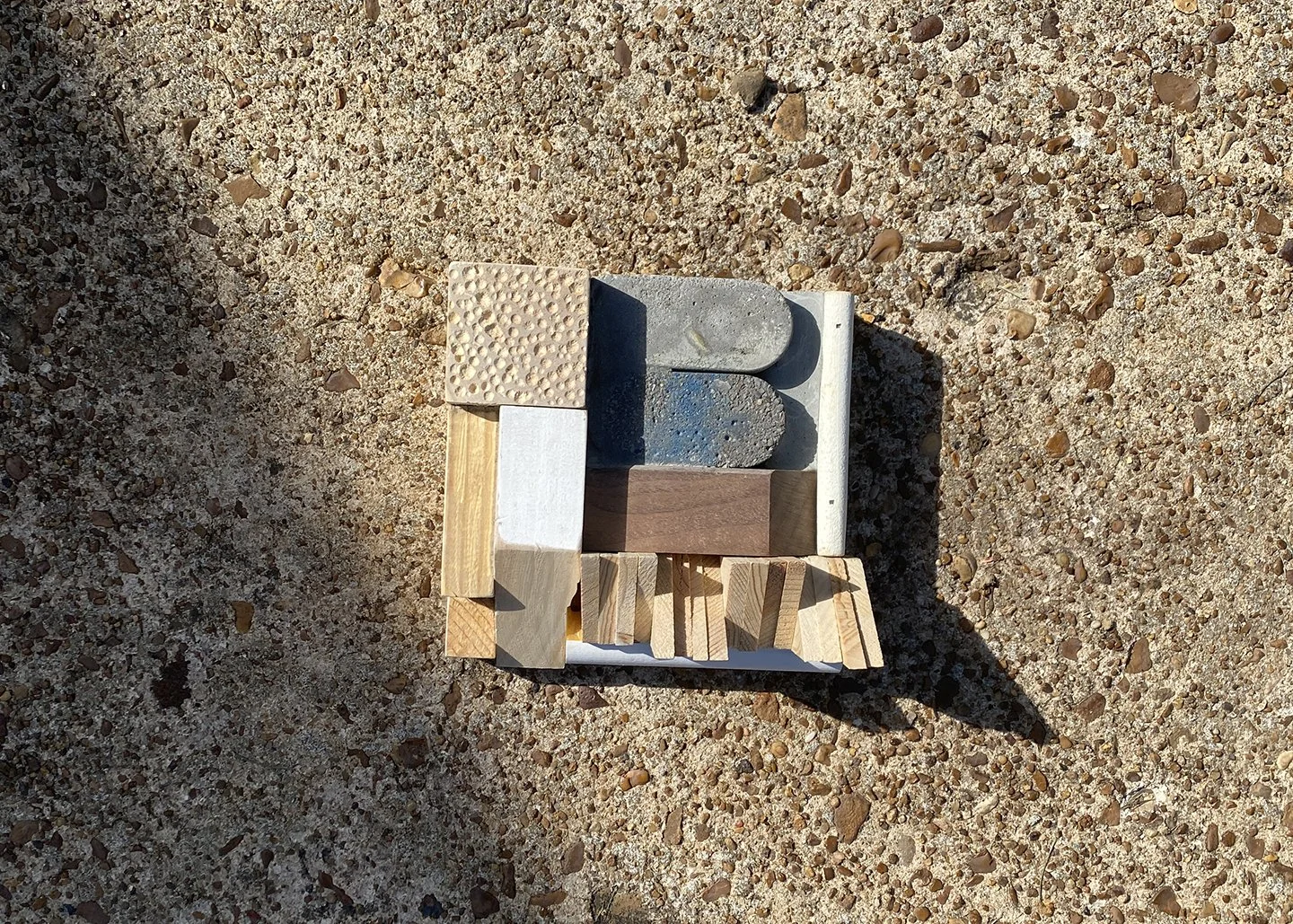
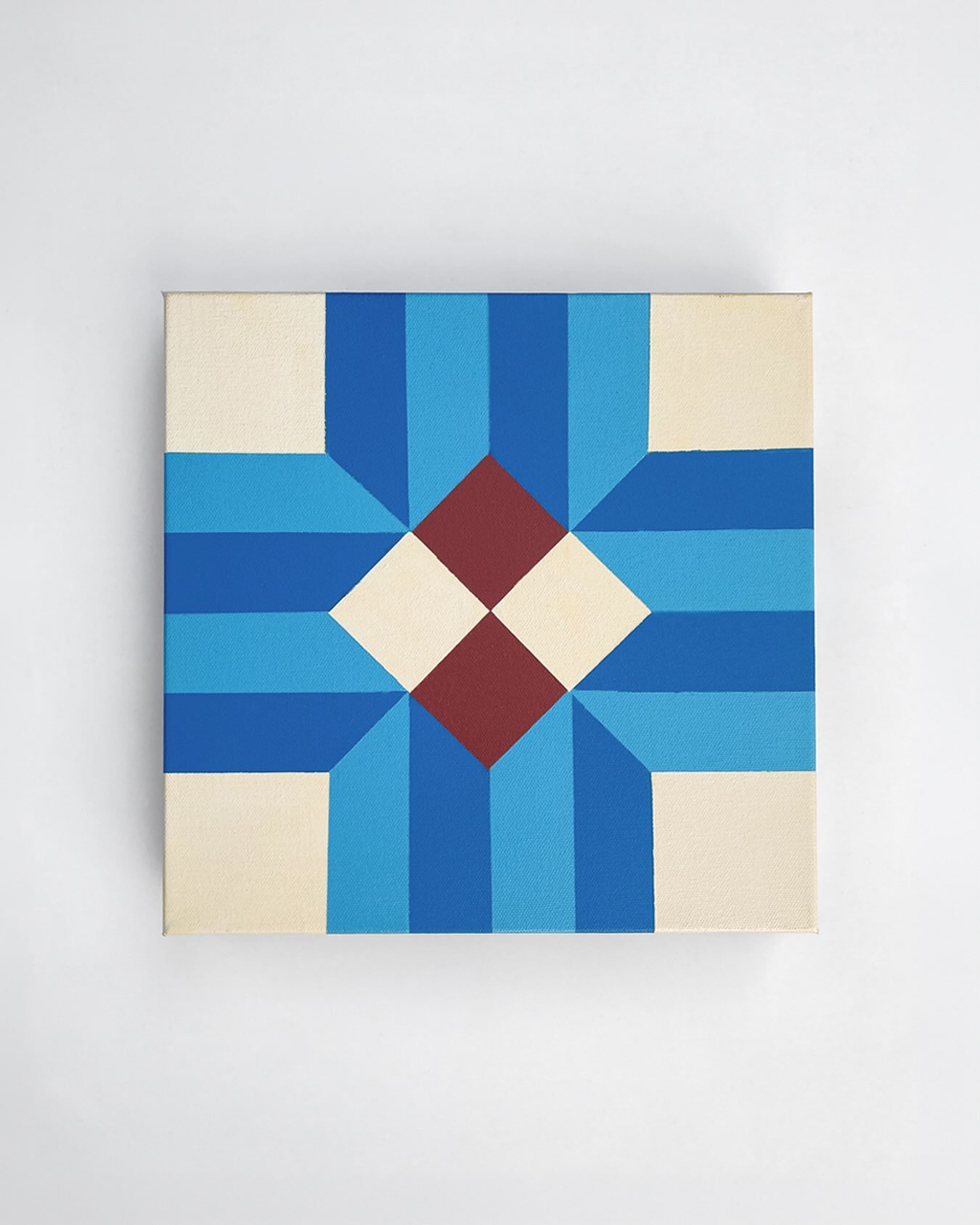
A wood, concrete assemblage yet to be named.
I started this piece last year, then let it sit for a while. It stayed in the studio and then in storage, unfinished, waiting for me to understand what it needed. Recently, I returned to it with fresh eyes and was able to bring the composition to a place that feels resolved.
The piece brings together wood, textured plywood, and small areas of wood glue and concrete used to fill voids. I enjoy working this way because the materials carry their own history and resistance. Some pieces are clean and geometric. Others are rough, chipped, or irregular. The final composition sits somewhere between a collage, a wall relief, and a small architectural model.
Some works need time. Not every unfinished object is abandoned. Some are just waiting for the right moment to become clear.
Low-Pressure Assemblage
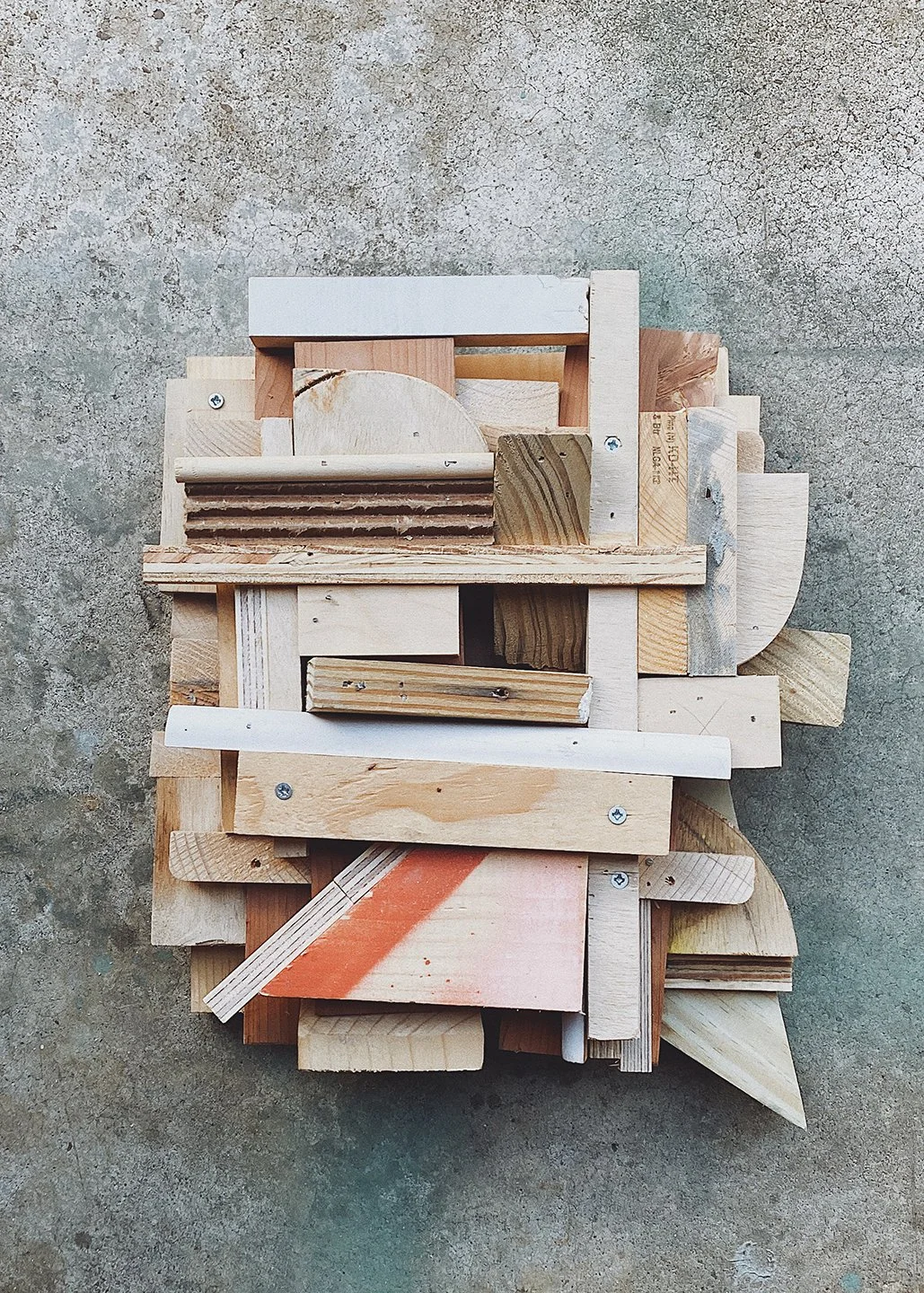
Built from scraps, offcuts, fasteners. It all adds up.
This piece started as a brain dump project: a way to use scrap wood, try a few tools, and make something without the pressure of a proposal, deadline, or final outcome. I have been adding offcuts, plywood, thin strips, rounded forms, and small painted fragments as I go, paying attention to how the pieces stack, overlap, and interrupt each other.
Right now, the work is mostly about learning by doing. I have been practicing with a brad nailer and testing different fasteners. I am also thinking about adding veneer and making a French cleat for the back so the piece can hang cleanly on the wall.
It is low-profile and strictly for me, but it still connects to my larger interests in geometry, architecture, material, and how things hold together. That is probably the best part. Making a project without pressure, but not without purpose.
OK Blog
Notes on art, design, process, and public work.
Featured Posts