Working With What I Have
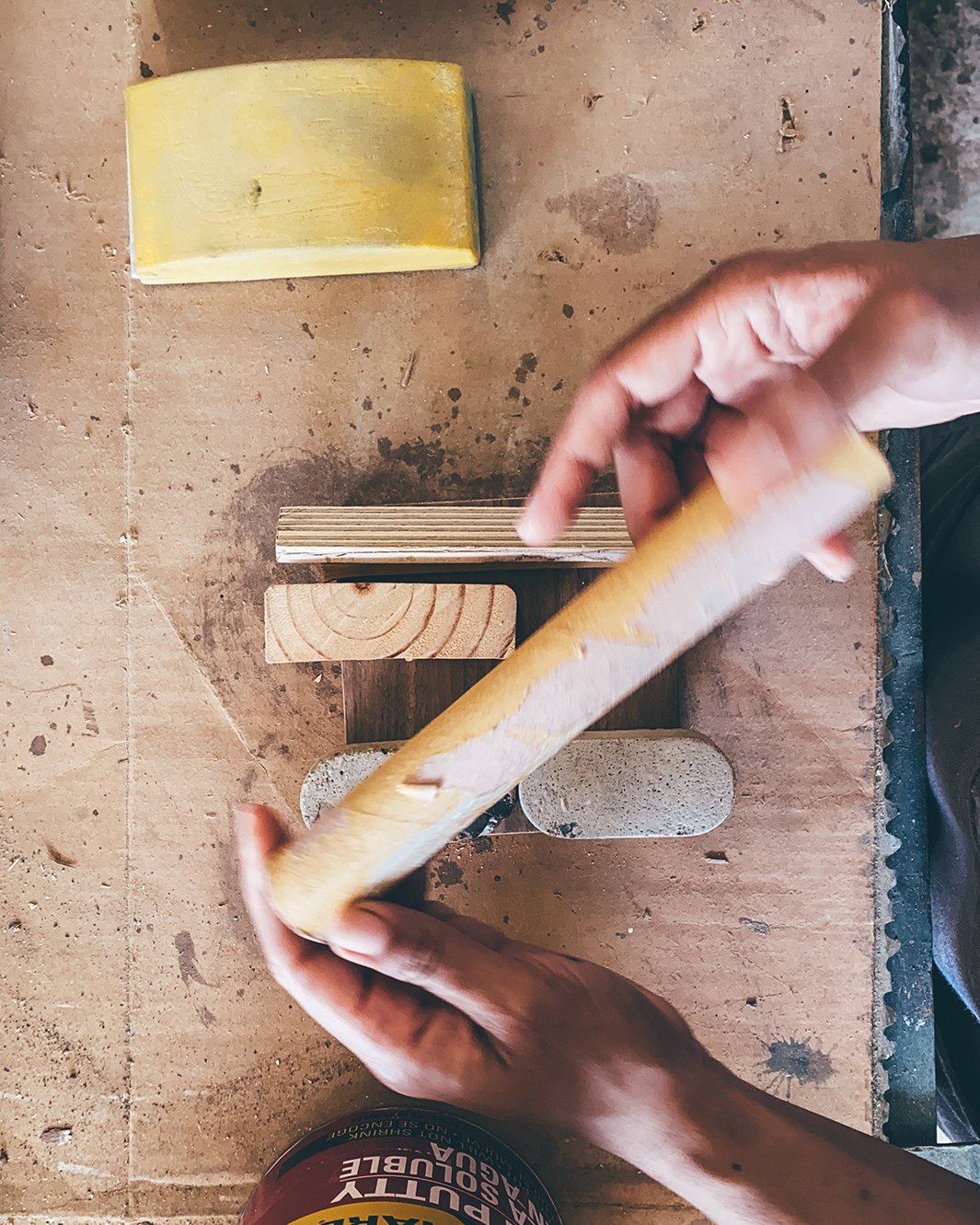
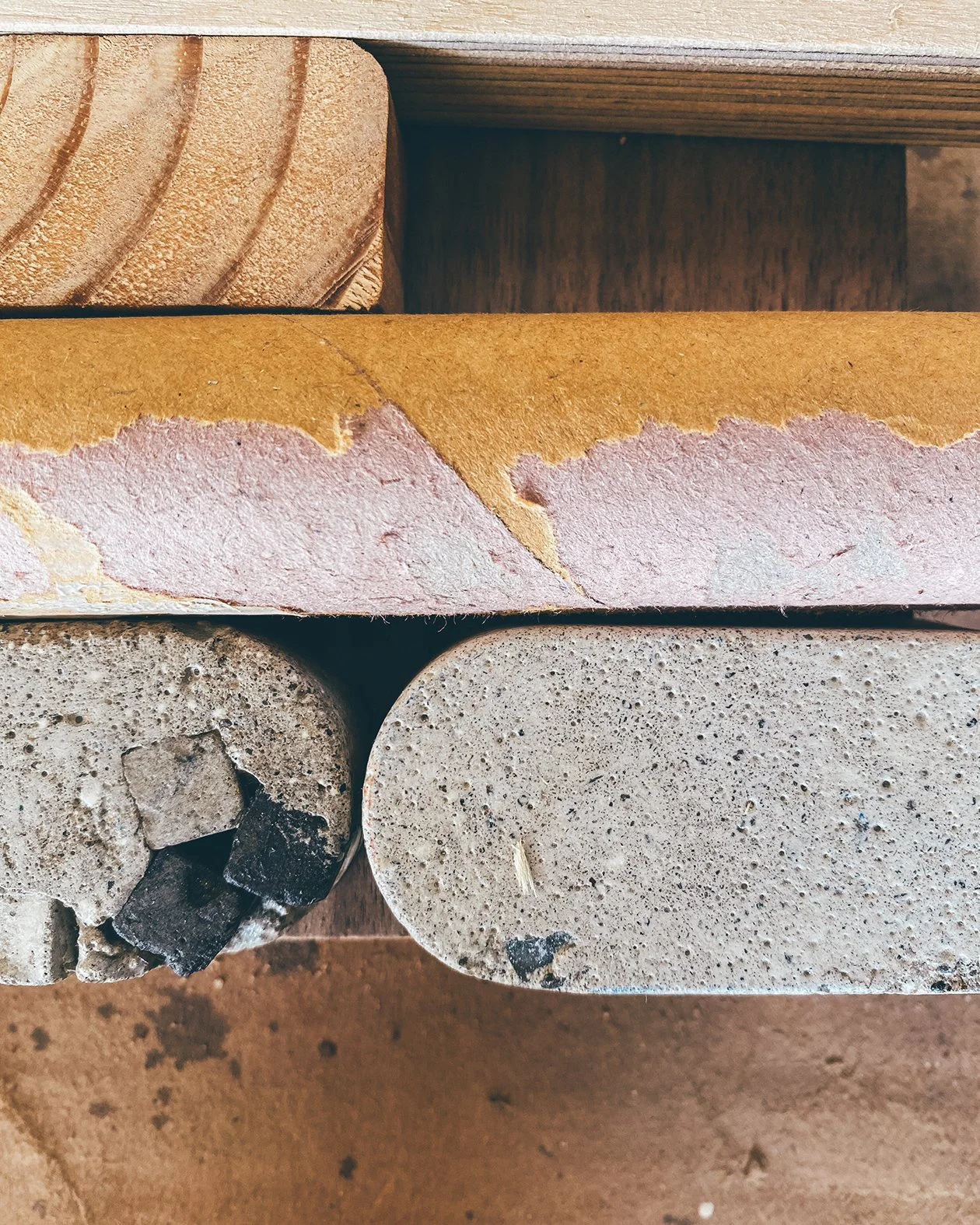
Lately, I’ve been thinking a lot about the materials I keep around my workspace and why I keep returning to them.
Naturally, wood remains my primary material. A lot of it comes from scrap pieces I’ve found or that have been given to me. When I had my studio at Marshall Arts, a friend dropped off leftover wood from the Kinfolk restaurant in Harbor Town, and I’m actually still working through those pieces right now.
I’m also pulling from the environment around me: dried bamboo reeds that fall from along my backyard fence, cardboard tubes from paper towels, and even the empty rolls from masking tape. I also have these concrete pieces I made back during the pandemic. For a long time, they just sat there. Sometimes you have to let things rest for a few years until you finally have that lightbulb moment, and then it’s time to find a way to merge them with the wood.

My process usually starts with a backing piece or substrate. I love anything modular, so that substrate acts as my grid. I just imagine how to align everything vertically and horizontally, placing objects along those invisible, imaginary lines until the arrangement looks right. Because I’m not using much color right now, the focus is entirely on form, material, and how things sit in proximity to one another. (I do have some copper wire and steel pipes sitting prominently in my work area, just floating around in the back of my mind until an idea for them solidifies).
One thing I am pushing myself to think more about is how to give more meaning to these wall reliefs. I'm exploring how I can use relics, artifacts, or elements of my family history to imbue more personal significance into each piece.
Material Memory
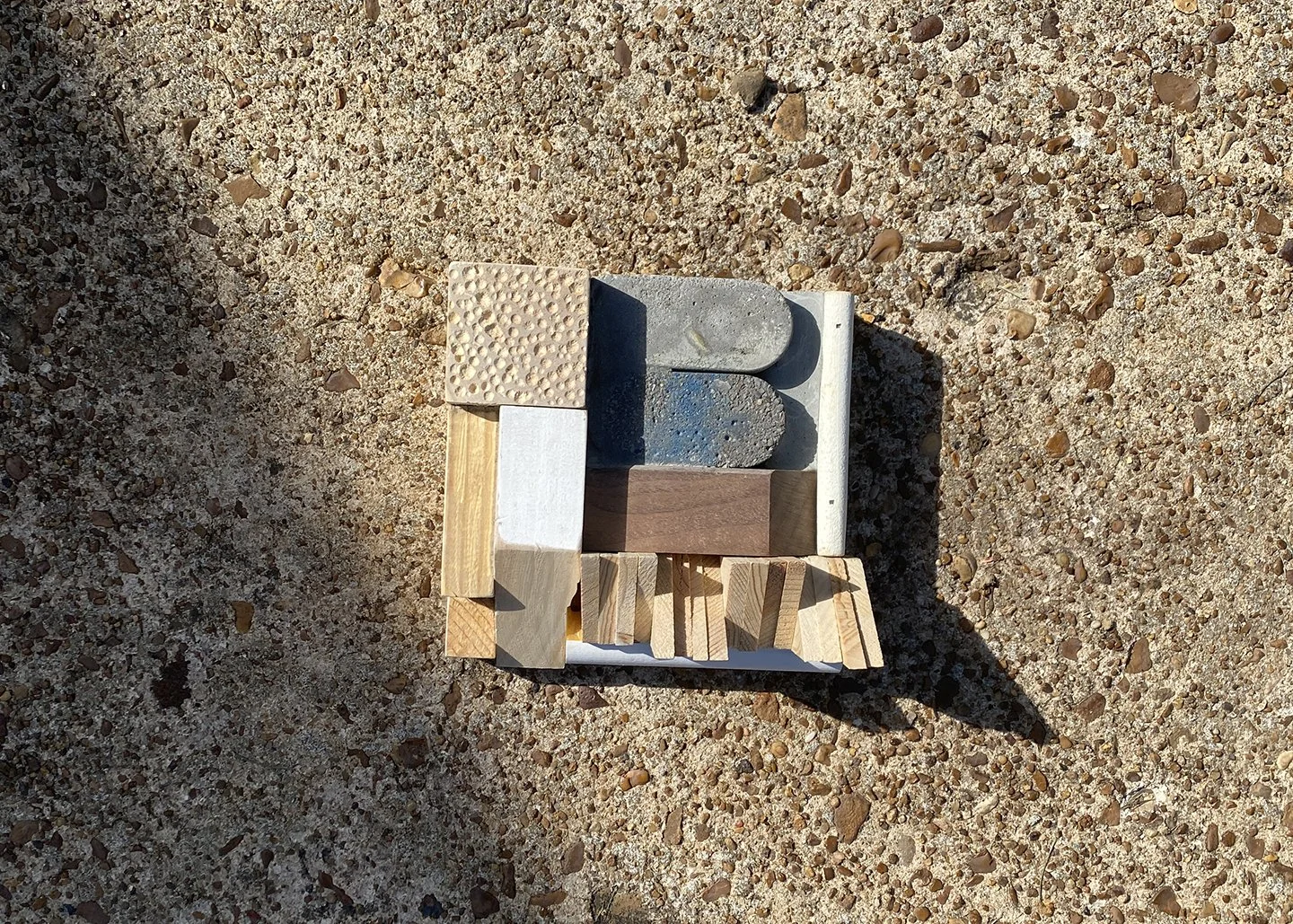
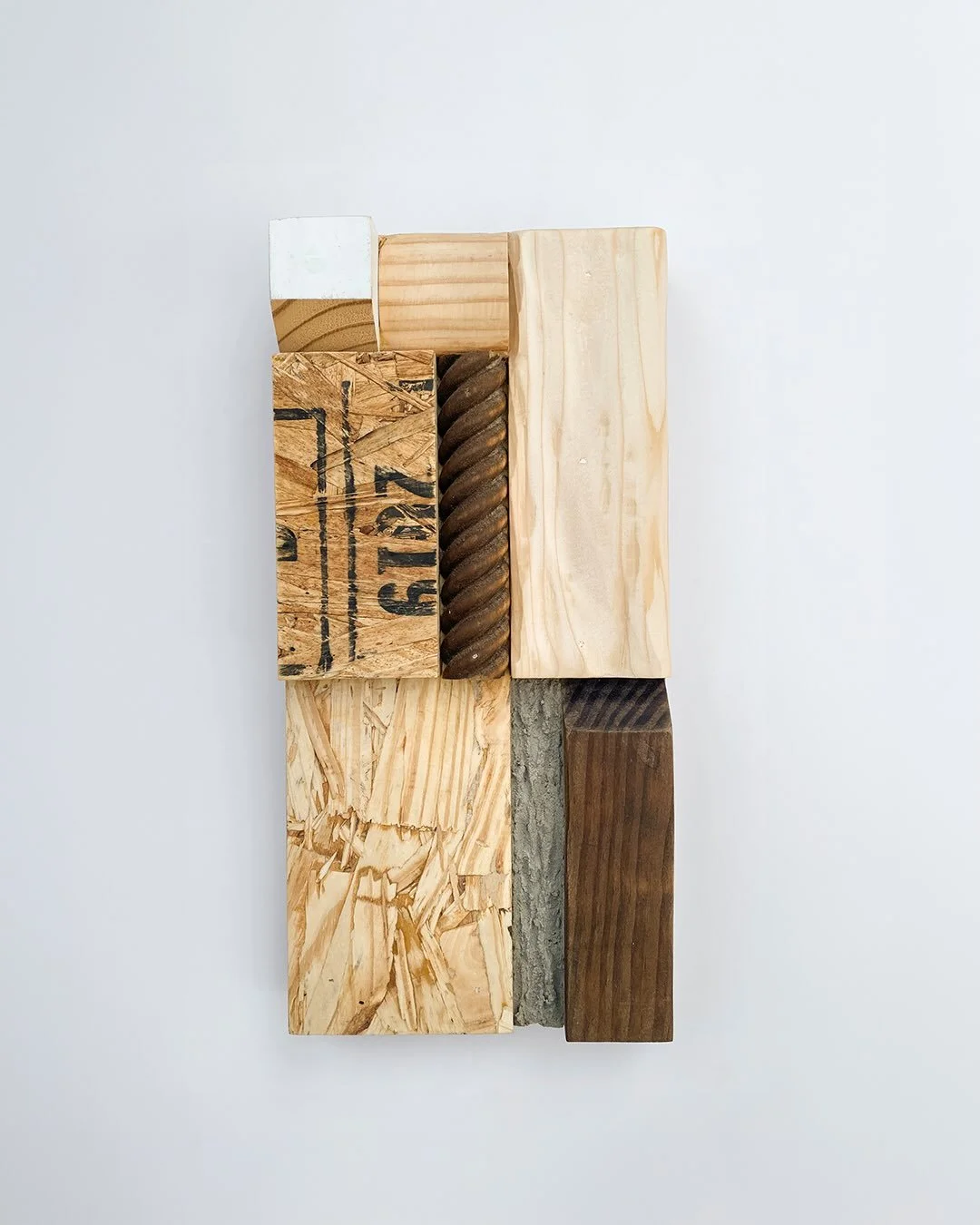
A wood, concrete assemblage yet to be named.
I started this piece last year, then let it sit for a while. It stayed in the studio and then in storage, unfinished, waiting for me to understand what it needed. Recently, I returned to it with fresh eyes and was able to bring the composition to a place that feels resolved.
The piece brings together wood, textured plywood, and small areas of wood glue and concrete used to fill voids. I enjoy working this way because the materials carry their own history and resistance. Some pieces are clean and geometric. Others are rough, chipped, or irregular. The final composition sits somewhere between a collage, a wall relief, and a small architectural model.
Some works need time. Not every unfinished object is abandoned. Some are just waiting for the right moment to become clear.
Life's a Beech
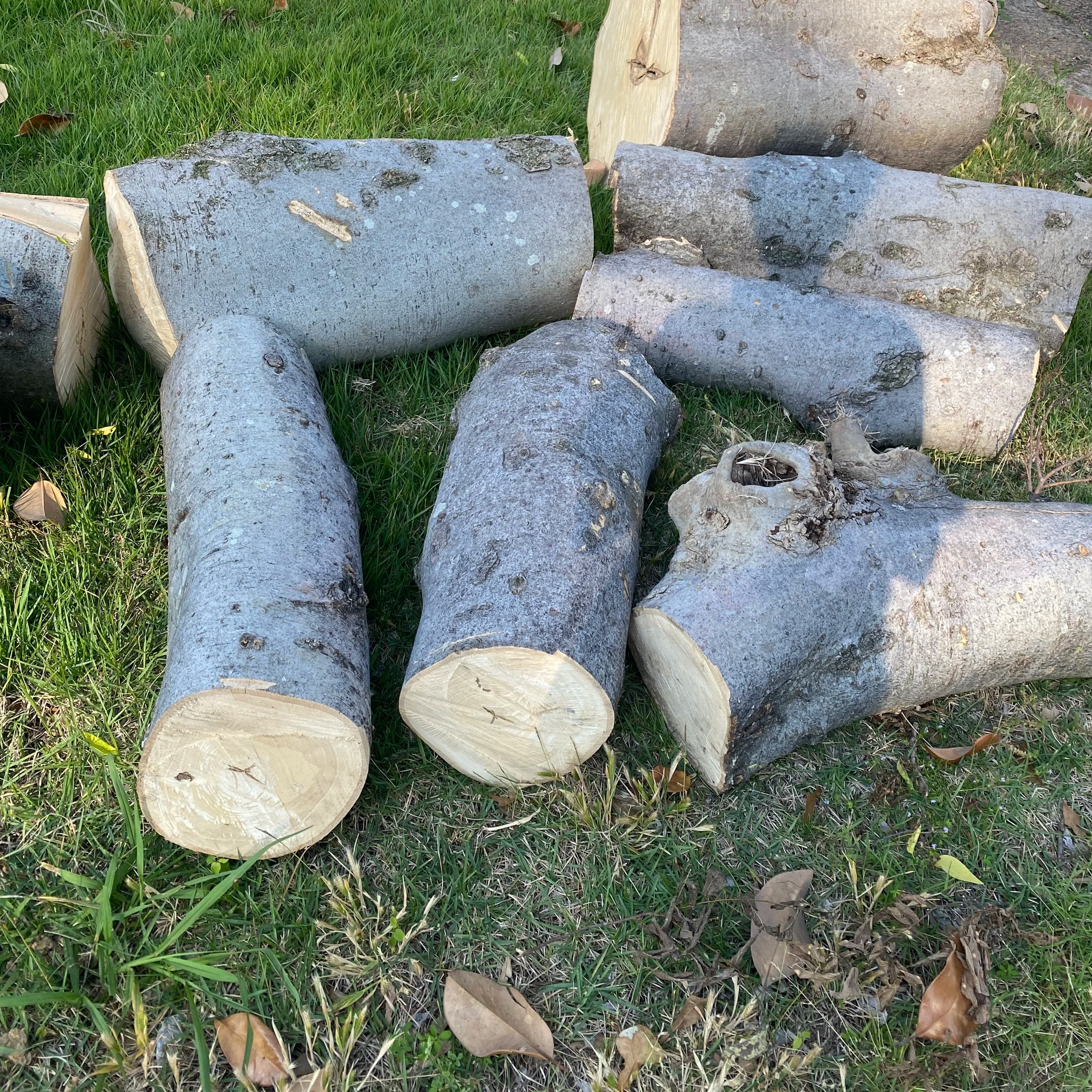
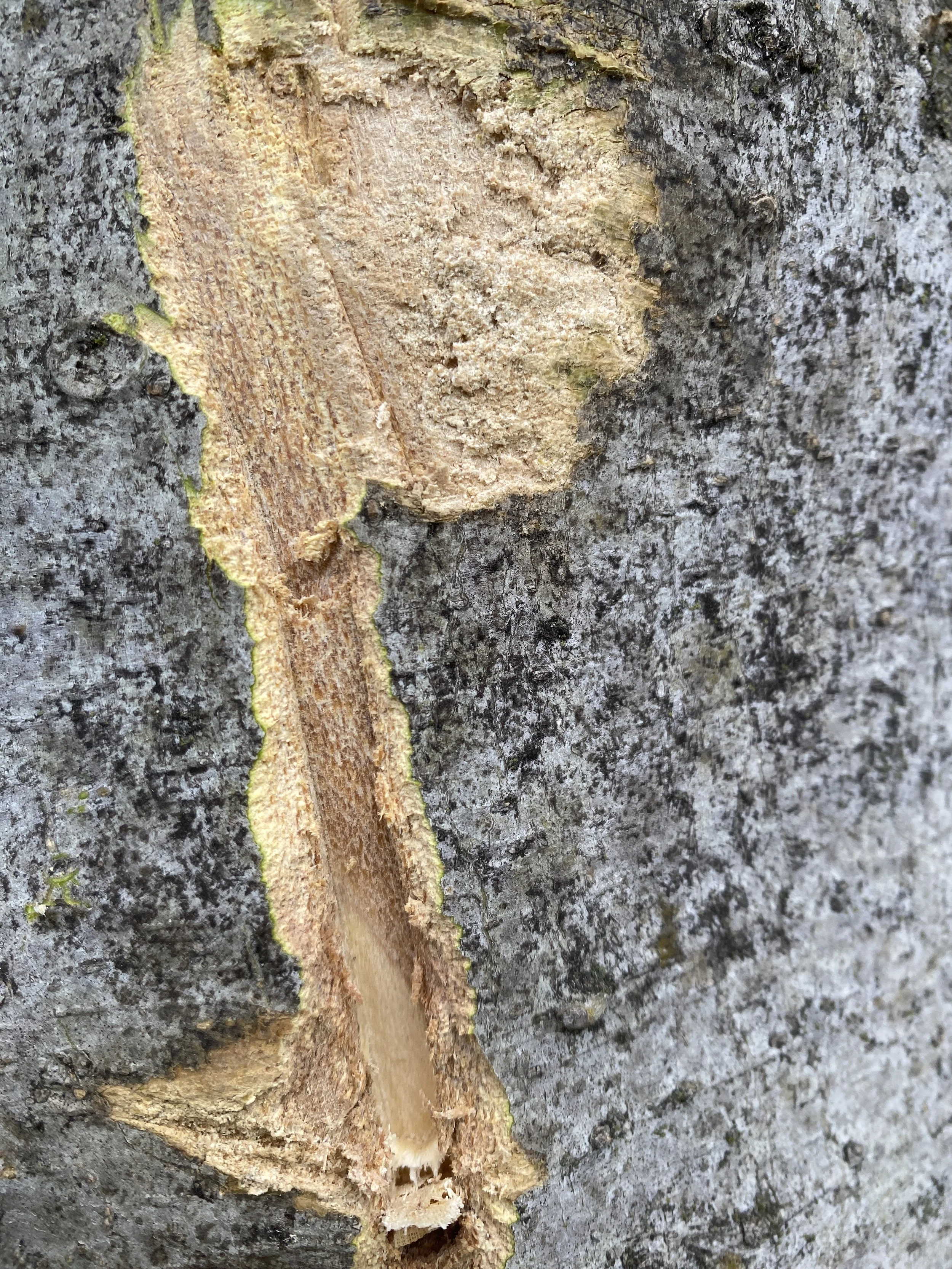
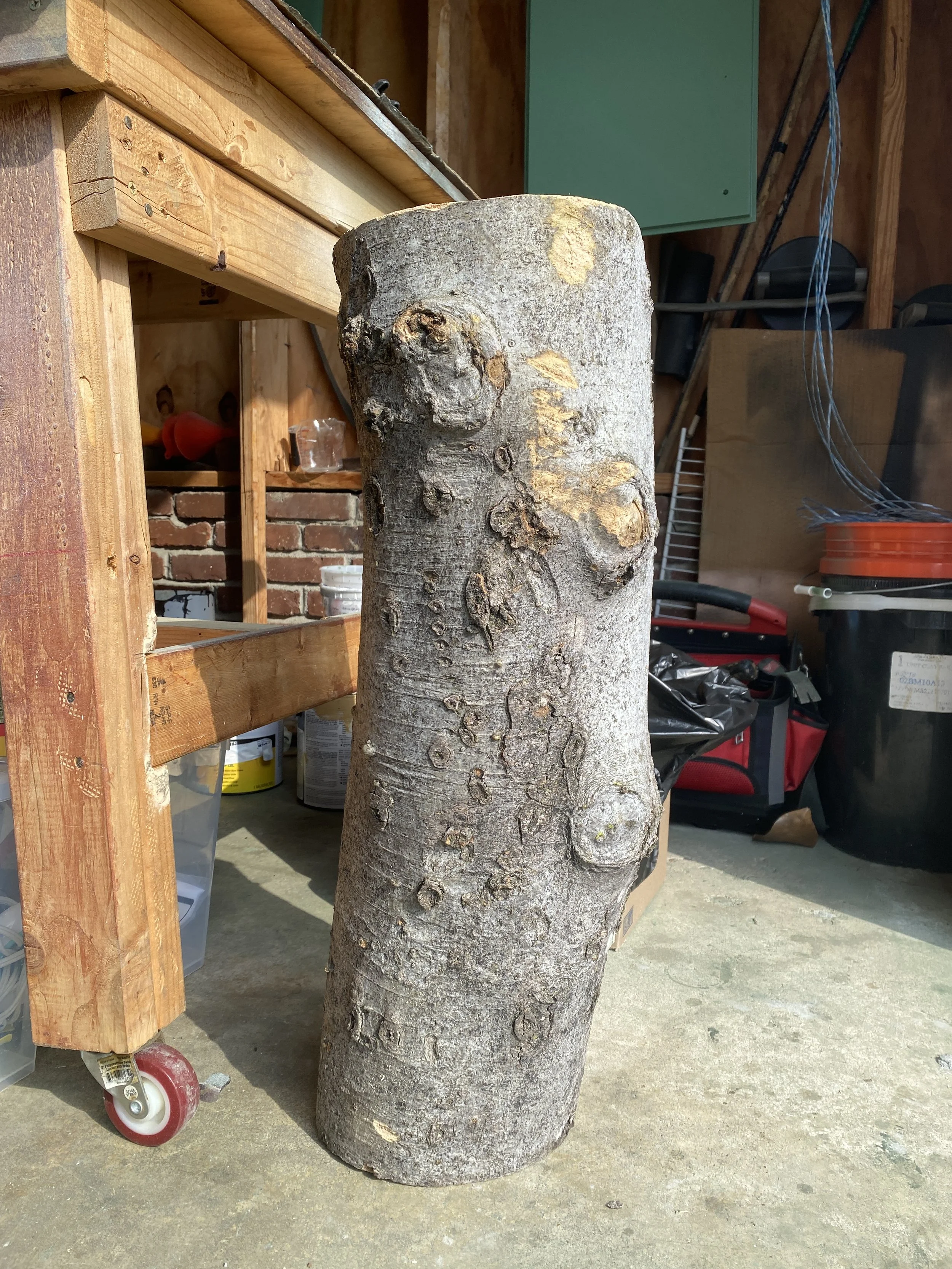
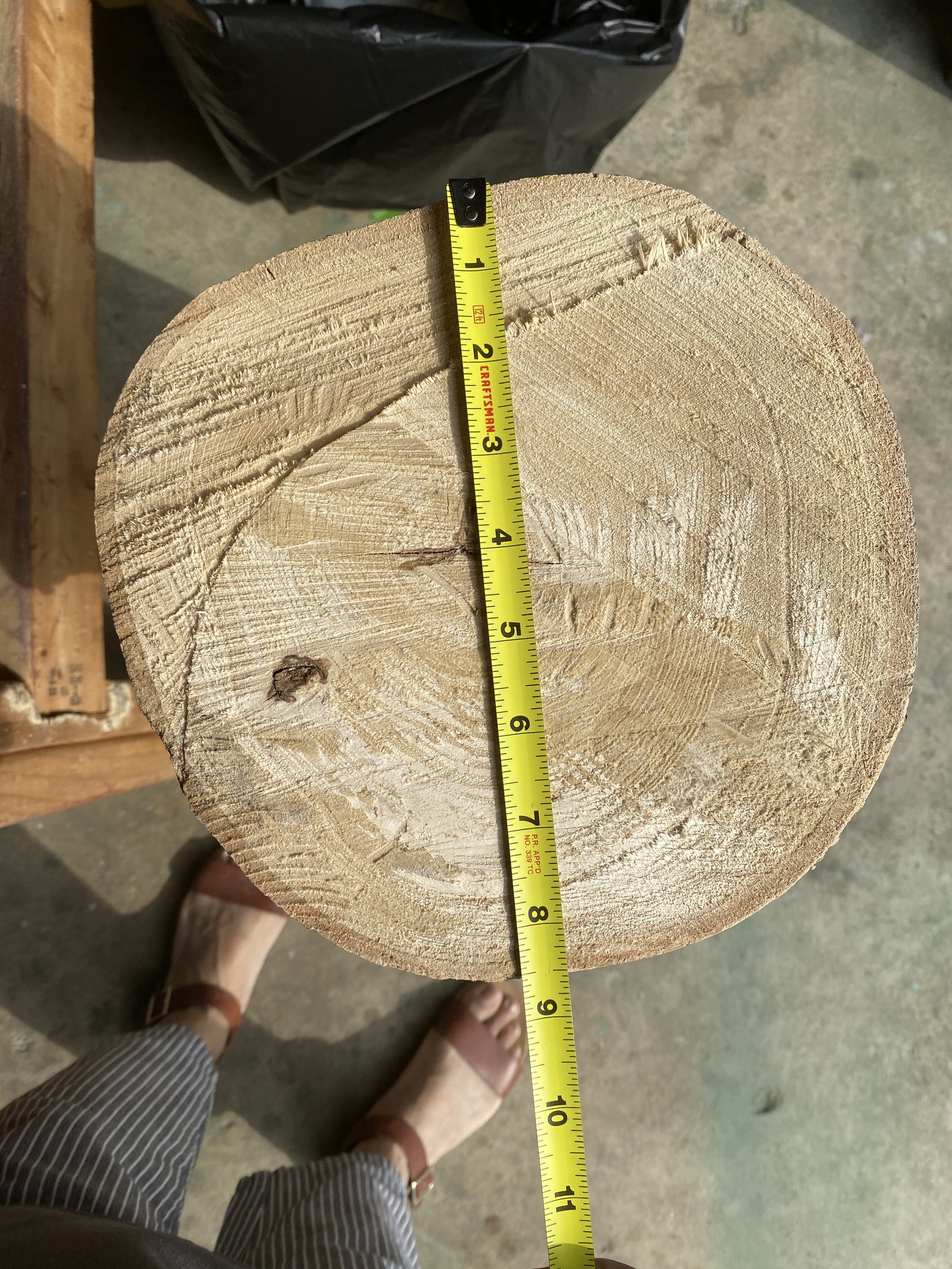
I found this log and brought it into the garage as the starting point for a new sculpture experiment. It’s about 8.5 inches in diameter and 26.5 inches tall, with a solid presence that made it feel worth saving. A friend suggested it may be Beech, and the smooth gray bark makes that possible, though I still need to confirm it. Maybe I need to find some leaves and determine the species that way?
I’ve started chipping away at the bark with chisels, slowly revealing the wood underneath. I don’t plan to remove all of it. I like the contrast between the rough outer surface and the exposed wood, especially around the knots.
For now, I’m letting the material guide the piece. I’ll keep testing what to remove, what to leave, and how this found log can become a sculpture.
OK Blog
Notes on art, design, process, and public work.
Featured Posts